
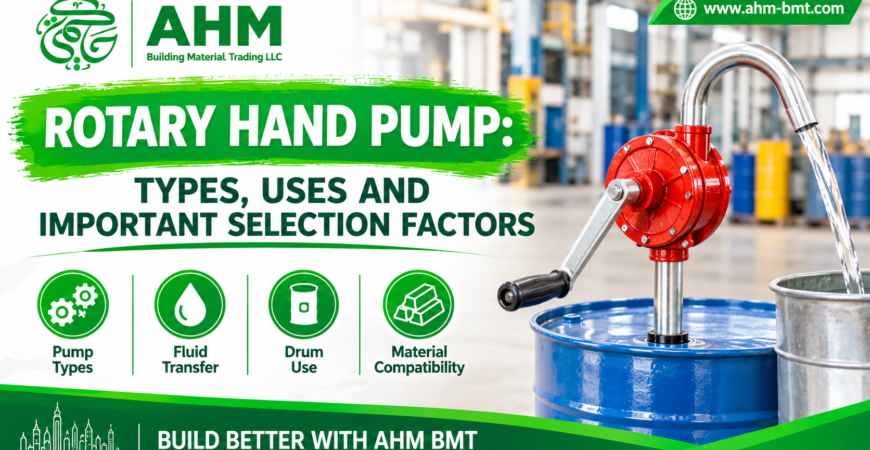
Transferring liquids from drums, barrels, and storage containers is a regular requirement in workshops, industrial facilities, construction sites, and maintenance operations. Depending on the working environment, manually operated pumping equipment can provide a practical way to move compatible liquids without relying on an electric motor.
A Rotary Hand Pump is a manually operated device designed to transfer liquids through a rotating mechanism. It is useful in applications where controlled manual fluid transfer is required. Its construction, operating mechanism, and compatibility with the liquid being handled are important considerations when selecting the right equipment.
For contractors, workshop operators, maintenance professionals, and industrial buyers in Dubai, understanding the available pump options and their applications can help simplify purchasing decisions. AHM BMT supplies construction, hardware, and industrial products, including equipment and accessories for different workplace requirements.
What Is a Rotary Hand Pump?
A rotary hand pump is a manually operated pumping device used to transfer liquid from one container to another. It works through a rotating mechanism activated by turning a handle. This movement helps draw liquid through the inlet and direct it towards the outlet.
Unlike electrically operated pumps, rotary hand pumps depend on manual operation. They can be considered for applications where the volume of liquid, operating conditions, and type of fluid are suitable for manual transfer.
The pump’s actual performance depends on its construction, design, and manufacturer specifications.
Main Components of a Rotary Hand Pump
Understanding the basic components helps buyers evaluate the equipment before purchasing.
- Operating Handle
The handle allows the operator to rotate the pump mechanism manually. Its design and positioning influence how the equipment is operated.
- Pump Body
The pump body contains the internal mechanism responsible for transferring the liquid. Its construction material should be compatible with the intended fluid.
- Inlet Connection
The inlet is the section through which liquid enters the pump. Its dimensions and arrangement should match the intended container and installation requirements.
- Outlet Connection
The outlet directs the transferred liquid towards the receiving container. Its arrangement should suit the intended fluid-transfer setup.
- Internal Rotary Mechanism
The internal mechanism creates the movement required to transfer liquid when the handle is turned. Its design varies depending on the pump model.
Different Types of Rotary Hand Pumps
Manual pumps are available in different configurations depending on their operating mechanisms, construction, and intended applications. The following are common manual pump categories to understand when comparing available equipment.
1. Rotary Drum Pump
A rotary drum pump is designed to transfer compatible liquids from drums into smaller containers. It is commonly considered for workplaces where liquids are stored in drums and need to be transferred manually.
Before purchasing, check the drum connection, inlet arrangement, and compatibility with the liquid.
2. Rotary Barrel Pump
Rotary barrel pumps are used for transferring suitable liquids from barrels. Their installation and operation depend on the barrel dimensions, pump design, and fluid characteristics.
3. Manual Fuel Transfer Pump
Manual fuel transfer pumps are intended for transferring compatible fuels. These pumps must be specifically approved for the intended fuel and application.
A general-purpose rotary hand pump should not automatically be considered suitable for petrol, diesel, or other flammable liquids.
4. Manual Oil Transfer Pump
Manual oil transfer pumps are used for moving compatible oils and lubricants between storage containers. Their suitability depends on the oil’s viscosity and the pump’s construction materials.
How Does a Rotary Hand Pump Work?
A rotary hand pump operates by using a manually turned handle to activate its internal pumping mechanism.
The general operating process involves the following steps:
- Position the pump: Install the pump according to the manufacturer’s instructions.
- Connect the inlet: Place or connect the inlet to the liquid container.
- Prepare the outlet: Direct the outlet towards the receiving container.
- Turn the handle: Operate the handle to activate the internal rotary mechanism.
- Transfer the liquid: Continue turning the handle according to the recommended operating procedure.
- Complete the operation: Stop pumping and clean or store the equipment according to the manufacturer’s guidance.
The exact procedure can vary depending on the pump design. Always follow the instructions supplied with the equipment.
Common Applications of Rotary Hand Pumps
Rotary hand pumps can support different liquid-transfer requirements in workplaces where manually operated equipment is appropriate.
1. Industrial Liquid Transfer
Industrial facilities may need to transfer compatible liquids between storage containers and smaller receiving vessels. A suitable manual pump can support these operations when its specifications match the application.
2. Workshop Operations
Workshops that handle oils, lubricants, and other compatible liquids may use manual pumping equipment to move fluids between containers.
3. Maintenance Activities
Maintenance teams sometimes need to transfer liquids during equipment servicing and routine maintenance. Selecting an appropriate pump helps ensure that the equipment matches the fluid and working conditions.
4. Drum and Barrel Handling
Storage drums and barrels may contain liquids that need to be transferred into smaller containers. A pump designed for the relevant container can make this task more manageable.
5. Oil and Lubricant Transfer
Manual pumps designed for compatible oils can be used in suitable maintenance and workshop applications where lubricants need to be moved from storage containers.
Important Factors to Consider When Selecting a Rotary Hand Pump
Selecting suitable pumping equipment requires understanding the liquid, container, and operating requirements. Buyers should review the following factors before purchasing.
1. Type of Liquid
Identify the liquid that needs to be transferred. Different fluids have different properties, including viscosity and chemical characteristics.
Check whether the pump’s construction materials are compatible with the intended liquid. Do not use general-purpose equipment for specialised chemicals or fuels unless the manufacturer confirms its suitability.
2. Pump Construction Material
The pump body and internal components should be appropriate for the liquid and working environment.
Different models may use different construction materials, seals, and internal components. Review the product specifications to understand the material composition.
3. Transfer Capacity
Consider how much liquid needs to be transferred and how frequently the pump will be used.
Check the manufacturer’s stated delivery rate or capacity and compare it with your operational requirements. Avoid selecting equipment based only on its physical size.
4. Container Compatibility
Check whether the pump is designed for the container from which the liquid will be transferred.
For example, a drum-mounted pump may have different connection requirements from equipment designed for another type of storage container.
5. Operating Mechanism
The handle and rotary mechanism should be suitable for the intended frequency of use.
Review the operating instructions, handle design, and maintenance requirements before making a purchase.
6. Hose and Connection Requirements
The inlet, outlet, and hose connections should match the intended transfer arrangement.
Check connection dimensions and confirm that any additional accessories are compatible with the selected pump.
7. Maintenance Requirements
Regular inspection and appropriate cleaning help maintain pumping equipment in suitable working condition.
Before purchasing, review the manufacturer’s cleaning instructions, servicing recommendations, and replacement component requirements.
Comparison of Different Manual Pump Options
The following table provides a general comparison of manual pumping equipment and its common applications.
| Pump type | Common application | Important consideration |
| Rotary drum pump | Liquid transfer from drums | Drum connection and fluid compatibility |
| Rotary barrel pump | Liquid transfer from barrels | Barrel dimensions and mounting |
| Manual fuel pump | Compatible fuel transfer | Fuel approval and material compatibility |
| Manual oil pump | Oil and lubricant transfer | Oil viscosity and pump specifications |
The correct option depends on the liquid being handled, the storage container, and the manufacturer’s stated operating requirements.
Practical Tips for Buying a Rotary Hand Pump
A few checks before purchasing can help contractors, industrial buyers, and maintenance teams select suitable equipment.
- Identify the liquid: Confirm the exact type of liquid before selecting the pump.
- Check material compatibility: Verify that the pump body, seals, and internal components are appropriate for the intended fluid.
- Review product specifications: Compare transfer capacity, connection dimensions, and operating requirements.
- Consider the container: Ensure that the pump can be properly installed or positioned on the intended container.
- Understand maintenance needs: Check the cleaning and servicing instructions provided by the manufacturer.
- Confirm safety requirements: For fuels and chemicals, use only equipment specifically approved for the intended application.
- Check availability: Contact the supplier to confirm the available model, specifications, and pricing before ordering.
Safety and Maintenance Considerations
Proper handling is important when operating manual pumping equipment. Using an incompatible pump or installing it incorrectly can lead to leakage, equipment damage, or exposure to hazardous liquids.
Consider these precautions:
- Inspect the pump for visible damage, leakage, or worn components before use.
- Ensure that all connections are properly secured.
- Use only liquids approved by the pump manufacturer.
- Wear suitable protective equipment according to the liquid being handled.
- Keep the receiving container stable during transfer.
- Follow the manufacturer’s operating limits and instructions.
- Clean and store the pump according to the supplied guidance.
- Keep equipment intended for different liquids separate where necessary to prevent contamination.
For flammable liquids, follow applicable workplace safety procedures and use equipment specifically approved for that service.
Rotary Hand Pump and Related Products Available at AHM BMT
For industrial buyers, workshop operators, and maintenance professionals, selecting suitable equipment involves considering both the main product and the accessories required for related workplace activities.
AHM BMT offers a range of construction, hardware, and industrial supplies. Its Hardware Tools category provides access to different tools and equipment used in construction, maintenance, and workshop applications.
The following products from AHM BMT are relevant to manual pumping, liquid handling, and associated maintenance requirements.
1. Rotary Hand Pump
The Rotary Hand Pump is the primary product relevant to this topic. It is listed in AHM BMT’s product range for buyers looking for manually operated pumping equipment.
Customers should review the product information or contact the company to confirm its specifications, intended liquid applications, and availability before purchasing.
2. Flat Hose
The Flat Hose is a related liquid-handling product. Hoses can be used in suitable fluid-transfer arrangements, provided their material, dimensions, pressure rating, and connections are compatible with the application.
Buyers should confirm whether the hose is suitable for use with their selected pump.
3. Air Hose Pipe
The Air Hose Pipe is another hose product available from AHM BMT. It is intended for air-related applications rather than being an automatic substitute for a liquid-transfer hose.
Its inclusion is relevant when discussing the different hose requirements found in industrial and workshop environments.
4. PVC Buckets
The PVC Buckets can be considered for suitable storage, collection, and handling tasks around workplaces.
When using containers for transferred liquids, check their material compatibility and suitability for the particular fluid.
These products serve different purposes. The rotary hand pump is the main pumping product, while the other items support related handling and workshop requirements where their specifications are appropriate.
Why Choose AHM BMT for Industrial and Construction Supplies in Dubai?
AHM BMT, officially known as A H M Building Materials Trading LLC, supplies construction and industrial products to contractors, project managers, procurement teams, maintenance professionals, and individual buyers.
Its product range includes:
- Hardware tools
- Construction consumables
- Building materials
- Safety equipment
- Rigging products
- Lifting products
- Paint items
AHM BMT serves both wholesale and retail customers. Buyers can contact the team to enquire about product specifications, pricing, and stock availability.
Customers looking for industrial and construction supplies can contact AHM BMT for product enquiries and purchasing assistance.
Conclusion
A rotary hand pump is a useful option for transferring compatible liquids in workshops, industrial facilities, maintenance environments, and storage areas. Selecting the right equipment requires attention to liquid compatibility, construction material, transfer capacity, container dimensions, and operating requirements.
Understanding these factors helps buyers identify a suitable pump for their intended application while supporting proper handling and maintenance.
AHM BMT provides a range of construction and industrial products, including its Rotary Hand Pump, along with other tools and accessories for workplace requirements. Contractors, workshop operators, and industrial buyers in Dubai can review the available products and contact the company for further information.
FAQs:
Q1. What is a rotary hand pump used for?
A rotary hand pump is used to transfer compatible liquids from one container to another through a manually operated rotating mechanism. Its applications depend on the pump design and fluid compatibility.
Q2. How does a rotary hand pump work?
It operates through a manually turned handle connected to an internal rotary mechanism. Turning the handle activates the mechanism and moves liquid from the inlet towards the outlet.
Q3. What liquids can a rotary hand pump transfer?
The liquids depend on the pump’s construction materials and manufacturer specifications. Some models are designed for oils, fuels, or other compatible liquids. Always verify suitability before use.
Q4. What is the difference between a rotary drum pump and a barrel pump?
Both are used for transferring liquids from larger containers. Their differences may include mounting arrangements, connection dimensions, and intended container compatibility.
Q5. How do I select the right rotary hand pump?
Consider the liquid type, pump material, transfer capacity, container dimensions, connection requirements, and operating conditions before purchasing.
Q6. Can a rotary hand pump be used for diesel transfer?
Only if the manufacturer specifically confirms that the pump model is suitable for diesel. Check material compatibility and applicable safety requirements before use.
7. Does a rotary hand pump require electricity?
No. A manually operated rotary hand pump uses a handle to activate its internal mechanism and does not require an electric motor.
8. How should a rotary hand pump be maintained?
Inspect the pump regularly, check its connections, clean it according to the manufacturer’s instructions, and store it appropriately. Follow the recommended maintenance guidance.
9. Where can I buy a rotary hand pump in Dubai?
Customers can enquire about the Rotary Hand Pump listed on the AHM BMT website. The company is located at Naif Bazaar Center, Nakheel, Dubai, and can provide information about product availability and pricing.