
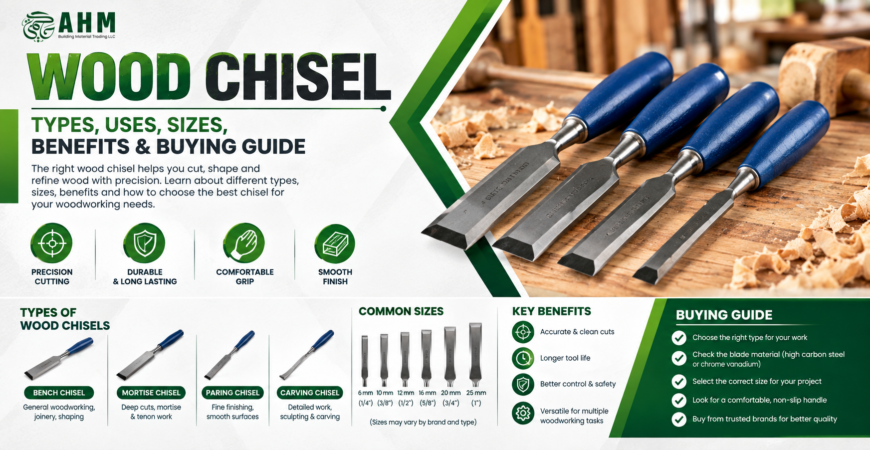
A wood chisel is a hand tool used to cut, shape, carve, pare, and remove wood with controlled precision. Carpenters, joiners, furniture makers, woodworkers, contractors, and maintenance professionals use chisels for tasks ranging from fine joinery to heavy material removal.
For professionals in Dubai and across the UAE, AHM BMT supplies dependable hardware tools and construction products for demanding jobs. Its hardware tools range supports carpentry, construction, maintenance, and workshop applications. AHM BMT also provides a dedicated wood chisel for professionals who need controlled and accurate wood cutting.
Selecting the right chisel depends on the job, wood type, required cut, blade width, handle design, and working method. A narrow chisel can provide precision, while a wider or heavier design can remove more material during demanding carpentry work.
This guide explains the different types of wood chisels, common sizes, applications, selection factors, maintenance requirements, and safe working practices.
What Is a Wood Chisel?
A wood chisel is a cutting tool with a sharpened blade designed specifically for working with wood.
Unlike a saw, which cuts through material using repeated teeth, a chisel removes wood through controlled pressure or striking action.
A typical wood chisel includes:
- Blade: The sharpened steel section that cuts the wood.
- Bevel: The angled surface behind the cutting edge.
- Cutting edge: The sharpened tip that contacts the wood.
- Ferrule: A reinforcing ring used on some handles.
- Handle: The part that the user grips or strikes, depending on the chisel design.
- Tang: The section connecting the blade to the handle.
Different chisel designs suit different woodworking tasks. Therefore, professionals should select the blade shape and size according to the work rather than treating every chisel as interchangeable.
What Is a Wood Chisel Used For?
A wood chisel performs several woodworking operations that require controlled material removal.
Cutting Wood Joints
Carpenters use chisels to refine joints such as mortises, dovetails, and other joinery.
The blade allows the worker to remove small amounts of wood accurately after making an initial cut with another tool.
Creating Mortises
A mortise requires a controlled rectangular recess in wood.
A suitable chisel can remove waste material and square the sides and corners of the opening.
Paring Wood
Paring involves removing thin layers of wood.
It requires controlled hand pressure rather than aggressive striking.
A sharp chisel helps the user make precise adjustments without unnecessarily damaging the surrounding surface.
Removing Excess Wood
Carpenters can use stronger chisels to remove unwanted wood during construction and joinery.
This makes the tool useful for shaping timber and correcting joints.
Carving and Detail Work
Narrow chisels can support detailed woodworking.
They can help create small recesses, refine edges, and work around corners.
What Are the Main Types of Wood Chisels?
Wood chisels come in several designs. Each design addresses a different woodworking requirement.
Bench Chisel
Bench chisels are versatile general-purpose chisels.
Carpenters commonly use them for:
- Joinery
- Mortises
- Trimming
- Paring
- General woodworking
They work well when one tool needs to handle multiple routine tasks.
Bevel-Edge Chisel
A bevel-edge chisel has beveled sides that provide better access to corners.
This design makes it useful for detailed joinery and fine woodworking.
The beveled sides can help the user work closer to a joint without the side of the blade interfering with the surrounding wood.
Firmer Chisel
A firmer chisel typically has a robust blade and supports heavier woodworking tasks.
It can handle more demanding material removal than a delicate detail chisel.
Professionals may use this design when durability matters more than extremely fine access.
Mortise Chisel
A mortise chisel has a thick, sturdy blade designed for chopping mortises.
Its robust construction allows it to withstand repeated striking with a suitable mallet.
The blade shape helps remove wood from deeper recesses.
Paring Chisel
A paring chisel supports fine, controlled cuts.
Woodworkers typically push this type by hand rather than striking it heavily.
It suits precision tasks where the worker needs to remove very small amounts of material.
Wood Chisel Sizes: Which Size Should You Choose?
Wood chisel size generally refers to the blade width.
Common sizes include:
| Chisel Size | Typical Use |
| 6 mm | Fine detail and small joints |
| 10 mm | Small joinery |
| 12 mm | General woodworking |
| 16 mm | Joinery and trimming |
| 19 mm | General carpentry |
| 25 mm | Mortises and larger cuts |
| 32 mm | Wider cuts and material removal |
| 38 mm | Large woodworking tasks |
The ideal size depends on the joint or surface you need to work on.
A narrow chisel provides better access to small spaces. A wider blade covers more surface area and can remove more wood with each pass.
Always check the actual product specification before purchasing because available sizes vary by manufacturer and product range.
How Do You Choose the Right Wood Chisel?
Choosing a wood chisel requires attention to the task, blade, handle, and wood.
1. Identify the Job
Start by defining the work.
Do you need to:
- Pare a surface?
- Cut a joint?
- Create a mortise?
- Remove excess wood?
- Perform detailed work?
- Remove larger amounts of material?
The answer helps determine the chisel style.
2. Select the Correct Blade Width
Blade width should correspond with the size of the joint or cut.
For narrow recesses, choose a narrower blade.
For larger joints and broader cuts, a wider blade can improve efficiency.
Using a blade that is too wide can make precise work difficult.
Using one that is too narrow can increase the number of passes required.
3. Consider the Wood Type
Wood hardness affects cutting performance.
Softwood and hardwood do not respond exactly the same way during cutting.
Hardwood generally requires a sharp, durable cutting edge and controlled technique.
Always keep the blade sharp regardless of the wood type.
4. Check Handle Construction
The handle should provide a secure and comfortable grip.
If the chisel design supports striking, the handle must also withstand the intended use.
Do not strike a chisel with a metal hammer unless the manufacturer specifically designed it for that purpose.
5. Check Blade Quality
A good blade should provide a durable cutting edge and resist premature wear.
Blade material, heat treatment, thickness, and overall construction all affect performance.
What Makes a Good Wood Chisel?
A quality wood chisel should provide a combination of durability, sharpness, control, and comfortable handling.
Sharp Cutting Edge
A sharp edge cuts wood more effectively and requires less force.
A dull edge can increase pressure requirements and make accurate work more difficult.
Strong Blade
The blade should withstand normal woodworking loads without unnecessary bending or deformation.
Heavy-duty applications require stronger blade construction.
Comfortable Handle
A well-designed handle helps the user maintain control during repetitive work.
Comfort becomes particularly important when professionals use a chisel for extended periods.
Secure Blade-to-Handle Connection
The blade and handle should remain securely connected during normal use.
Inspect the connection regularly, especially when the tool experiences repeated striking.
Suitable Blade Geometry
The blade angle and shape influence how the tool interacts with the wood.
Different woodworking tasks require different geometries.
Wood Chisel vs Other Woodworking Tools
A wood chisel does not replace every cutting tool.
| Tool | Main Function |
| Wood Chisel | Controlled wood removal and shaping |
| Hand Saw | Cutting wood across or along the grain |
| Coping Saw | Curved and detailed cuts |
| Plane | Flattening and smoothing surfaces |
| Wood Rasp | Shaping and rough material removal |
| Utility Knife | Light scoring and trimming |
Professional carpenters often combine several tools.
For example, a saw may create the initial joint while a chisel refines the joint and removes remaining material.
This combination provides greater control than attempting to perform every operation with a single tool.
How to Use a Wood Chisel Correctly
Correct technique improves precision and reduces the risk of damaging the workpiece.
Secure the Wood
Always secure the workpiece before cutting.
A moving piece can cause inaccurate cuts and increase the risk of injury.
Use an appropriate workbench, clamp, or holding method.
Position the Chisel Correctly
Place the cutting edge where you want to remove material.
Keep your hands away from the path of the blade.
Use Controlled Pressure
For fine paring, push the chisel carefully through the wood.
For suitable chopping work, use a compatible mallet and controlled strikes.
Avoid uncontrolled force.
Cut With the Grain Where Appropriate
Understanding wood grain helps reduce tearing and splitting.
Work with the grain when the application allows it.
If the grain changes direction, adjust your cutting approach accordingly.
Make Multiple Controlled Cuts
Do not try to remove excessive material in one strike.
Several controlled passes usually provide better precision.
How Do You Keep a Wood Chisel Sharp?
A sharp blade remains one of the most important factors in woodworking.
Inspect the Edge Regularly
Check the cutting edge for:
- Dullness
- Nicks
- Chips
- Uneven sharpening
- Rust
Small damage can affect cutting accuracy.
Sharpen at the Correct Angle
Use an appropriate sharpening method and maintain a consistent bevel angle.
The correct angle depends on the chisel and intended application.
Remove Burrs
After sharpening, remove the burr from the cutting edge using an appropriate finishing method.
Hone the Edge
Honing can improve the final sharpness and help create a clean cutting edge.
Protect the Blade
Store the chisel so that the cutting edge does not contact other tools.
This helps prevent accidental damage.
What Are Common Wood Chisel Mistakes?
Avoiding simple mistakes can significantly improve tool performance.
Using a Dull Chisel
A dull blade requires more force and can produce rough cuts.
Sharpen the edge when performance declines.
Striking the Wrong Chisel
Not every chisel can withstand hammer or mallet strikes.
Only strike chisels designed for that purpose.
Using a Metal Hammer
A metal hammer can damage a handle that was not designed for direct striking.
Use the appropriate mallet or striking tool recommended for the chisel.
Cutting Toward Your Hand
Always position the work and tool so that the cutting path moves away from your body and hands.
Leaving the Chisel Loose
A loose handle or damaged blade connection can create a safety hazard.
Inspect the tool before use.
Using Excessive Force
More force does not automatically produce better results.
Controlled cuts provide greater accuracy and reduce the chance of damaging the workpiece.
Wood Chisel Safety Tips
Woodworking involves sharp edges and potentially high-impact forces.
Follow these basic precautions:
- Wear suitable eye protection.
- Secure the workpiece firmly.
- Keep both hands clear of the cutting path.
- Use the correct striking tool.
- Inspect the handle and blade before use.
- Keep the cutting edge sharp.
- Never use a damaged chisel.
- Store chisels with their edges protected.
- Maintain a stable working position.
A sharp, properly maintained chisel generally provides better control than a damaged or excessively dull tool.
How Do You Maintain a Wood Chisel?
Proper maintenance can extend tool life and preserve cutting performance.
Clean the Blade
Remove wood residue after use.
Keep the blade dry to reduce corrosion.
Protect Against Rust
Store carbon-steel tools in a dry environment.
Where appropriate, apply suitable corrosion protection according to the manufacturer’s recommendations.
Maintain the Cutting Edge
Sharpen and hone the blade when required.
Do not allow the edge to become excessively dull.
Inspect the Handle
Check for cracks, loose components, or other damage.
Replace damaged handles or tools when necessary.
Store Safely
Keep chisels separated from other tools to protect the cutting edge.
A dedicated tool storage system can help prevent accidental contact.
Why Choose AHM BMT for Wood Chisels in UAE?
AHM BMT supports contractors, carpenters, builders, maintenance teams, workshops, and procurement professionals across Dubai and the UAE.
The company supplies building materials, hardware tools, construction consumables, safety products, lifting equipment, and other industrial supplies.
Professional Hardware Tool Range
Carpenters and contractors often need several hand tools for one project.
AHM BMT provides a broad hardware tools range to support construction, maintenance, and workshop requirements.
This allows professionals to source woodworking and general hardware products from one supplier.
Dedicated Wood Chisel Product
AHM BMT offers a dedicated wood chisel for woodworking and carpentry applications.
A dedicated product page also makes it easier for buyers to review the tool and match it with their intended application.
Construction-Focused Supply
AHM BMT understands the requirements of professional construction and maintenance teams.
The company focuses on supplying practical tools and materials that support everyday project work.
Convenient Procurement
Professional buyers often need more than one hand tool.
Sourcing products through a dedicated hardware and construction supplier can simplify procurement and help contractors manage project requirements more efficiently.
Support for UAE Professionals
AHM BMT serves customers in Dubai and across the UAE, supporting contractors, builders, carpenters, maintenance professionals, and other businesses that require construction and hardware products.
Conclusion
A wood chisel remains one of the most useful hand tools for professional carpentry and woodworking. The right chisel provides controlled cutting, accurate joint preparation, efficient material removal, and detailed finishing.
Choosing the correct blade width and chisel design helps you work more efficiently. Bench chisels suit general work, bevel-edge chisels support precise joinery, mortise chisels handle heavier chopping, and paring chisels provide fine control.
Proper sharpening, safe handling, suitable striking techniques, and regular maintenance also extend tool life and improve cutting quality.
For professionals in Dubai and the UAE, AHM BMT provides wood chisels alongside a wider range of hardware tools and construction supplies. By selecting the right tool for the application, contractors and carpenters can achieve cleaner results and maintain better control throughout their woodworking projects.
FAQs
Q1. What is a wood chisel used for?
Ans. A wood chisel cuts, shapes, pares, and removes wood. Carpenters use it for joints, mortises, trimming, and detailed woodworking.
Q2. What size wood chisel should I buy?
Ans. Choose the blade width according to the job. Narrow chisels suit detailed work, while wider chisels suit larger joints and material removal.
Q3. Can you hit a wood chisel with a hammer?
Ans. Only use a hammer or mallet with a chisel specifically designed for striking. Follow the manufacturer’s instructions.
Q4. What is the difference between a bench chisel and a mortise chisel?
Ans. A bench chisel provides versatile general-purpose woodworking performance. A mortise chisel has a heavier construction designed for chopping mortises.
Q5. How do you keep a wood chisel sharp?
Ans. Sharpen the bevel consistently, remove the burr, and hone the cutting edge using an appropriate sharpening system.
Q6. Why does my wood chisel tear the wood?
Ans. Tearing can result from a dull edge, incorrect cutting direction, unsuitable technique, or changing wood grain. Sharpen the blade and adjust your cutting approach.