
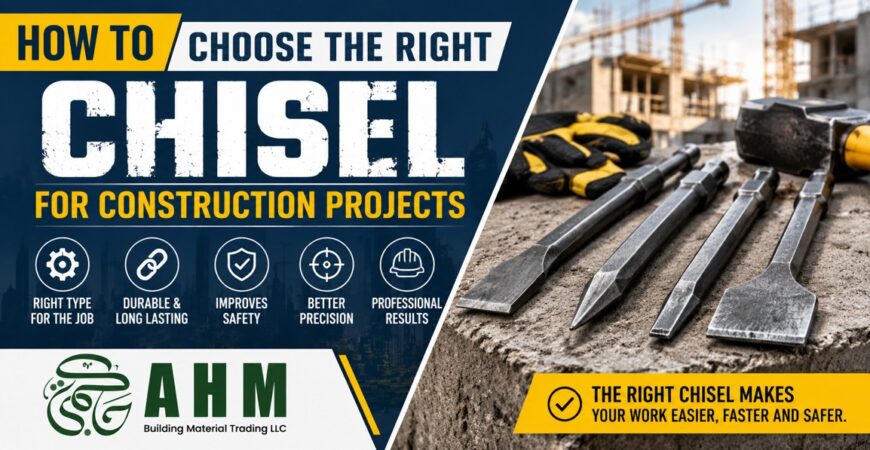
Construction, renovation, masonry, repair, and woodworking projects often require tools that can handle controlled breaking, shaping, scraping, and material removal. A Chisel is a basic hand tool for these types of tasks, but selecting the right design is important because different chisels are intended for different applications.
For contractors, builders, maintenance teams, carpenters, and tradespeople in the UAE, the right chisel should be selected according to the material, task, required working force, size, and overall tool design. Matching the tool to the job helps improve control and makes manual work more practical.
What Is a Chisel?
A chisel is a hand tool with a shaped working edge designed to cut, chip, scrape, split, or remove material. Depending on its design, a chisel may be used on materials such as wood, masonry, or metal-related work.
The working end is one of the most important parts to consider. Pointed, flat, and specialised designs serve different purposes, so the tool should always match the task rather than being selected only by appearance or size.
Why Choosing the Right Chisel Matters
Using a suitable chisel can make manual cutting, shaping, and material-removal tasks more controlled. The wrong type, however, may not provide the working edge or size required for the application.
For construction professionals, selection should take into account:
- Material being worked on
- Type of task
- Chisel shape
- Working-end design
- Overall size
- Handle and grip
- Frequency of use
- Method of applying force
These factors are particularly relevant for professionals handling different construction and maintenance jobs across the UAE.
Types of Chisels for Construction and Related Applications
Pointed and Flat Chisel
Pointed and flat chisels are useful when different working-end shapes are required for construction and general material-removal tasks. A pointed end can help concentrate force into a smaller area, while a flat end provides a broader contact surface.
The choice between them depends on the material and the specific job. For general construction work, having the appropriate shape available can make it easier to perform different tasks without relying on one tool for every application.
Wood Chisel
A Wood Chisel is designed for woodworking applications where controlled cutting and shaping are required. It can be useful for carpentry, joinery, fitting, and other tasks where precision matters.
When selecting a wood chisel, pay attention to the blade size and the type of woodworking task. A smaller size may provide greater control for detailed work, while larger sizes can be more suitable for removing more material.
Chipping Chisels
Chipping applications require a tool that can withstand repeated impact while providing the appropriate working edge. These chisels are commonly considered for tasks involving material removal during construction, renovation, and maintenance work.
The correct size and shape should be selected according to the material and the amount of material that needs to be removed.
Chisel Comparison Table
| Chisel Type | Typical Application | Working End | Main Selection Consideration |
| Pointed Chisel | Concentrated material removal | Pointed | Material and required force |
| Flat Chisel | General chipping and removal | Flat | Contact area and task |
| Wood Chisel | Carpentry and woodworking | Cutting edge | Blade size and precision |
| Chipping Chisel | Construction and maintenance work | Pointed or flat | Impact requirements |
| Specialised Chisel | Specific trade applications | Application-specific | Material and job type |
How to Choose the Right Chisel
1. Identify the Material
Start by identifying what material you will be working on. Wood, masonry, and other construction materials can require different tool designs.
A chisel suitable for one material should not automatically be assumed to be appropriate for another. Material compatibility should always be one of the first selection criteria.
2. Define the Job
Consider exactly what you need the chisel to do.
For example, the task may involve:
- Removing material
- Creating a groove
- Breaking or chipping material
- Shaping wood
- Scraping a surface
- Carrying out repair or maintenance work
Defining the task first makes it easier to select the appropriate chisel type.
3. Choose the Working End
The shape of the working end affects how force is transferred to the material.
A pointed design concentrates force into a smaller area, while a flat design provides a wider contact surface. Select the shape according to the type of work rather than choosing based only on convenience.
4. Consider Chisel Size
Size matters because it affects control, coverage, and suitability for the task.
Smaller chisels can be useful for detailed work, while larger options may be more practical when removing material over a wider area. The size should also be comfortable for the user to control.
5. Check Construction and Material
The tool should be appropriate for the amount of impact and frequency of use involved in the project.
For professional construction and maintenance work, consider the overall construction of the tool and whether it is suited to repeated use.
6. Consider the Handle and Grip
A comfortable grip can make a difference during longer periods of manual work. The handle should allow the user to maintain control while applying the required force.
For tools used frequently, grip comfort and handling should be considered alongside the working end.
7. Match the Tool to the Working Method
Think about how the chisel will actually be used. A tool for controlled hand work may have different requirements from one intended for repeated impact.
Selecting the chisel according to the working method helps avoid using an unsuitable tool for the application.
8. Consider Frequency of Use
For occasional maintenance, a basic option may be sufficient for the intended task. For professional contractors and workshops, the chisel may be used much more frequently, making appropriate construction, handling, and size more important.
Chisel Applications in Construction Projects
Renovation Work
Renovation projects often involve removing old materials, making adjustments, and preparing surfaces. A suitable chisel can be useful for controlled manual removal and preparation tasks.
Masonry Work
Construction and masonry applications may require chisels for chipping, breaking, or removing sections of material. The working-end design should match the particular task and material.
Demolition-Related Tasks
Some smaller demolition and removal jobs can involve hand chisels where controlled material removal is required. For heavier work, the tool should be selected according to the force and material involved.
Woodworking and Carpentry
Wood chisels are commonly associated with carpentry and woodworking tasks that require controlled cutting and shaping. Blade size and precision are important considerations for these applications.
Metalwork and Welding
Metalworking tasks may require specialised tools for removing unwanted material or cleaning surfaces. For welding-related applications, AHM BMT supplies a Welding Chipping Hammer, which is designed for removing slag, spatter, and other unwanted particles after welding.
Chisel vs Other Construction Hand Tools
| Tool | Main Purpose | Typical Use |
| Chisel | Cutting, shaping, chipping, or material removal | Construction, masonry, woodworking |
| Hammer | Striking and driving | General construction |
| Wrecking Bar | Levering and removal | Demolition and dismantling |
| Screwdriver | Fastening and loosening | Installation and maintenance |
| Pliers | Holding, gripping, and cutting | Repair and installation |
The tools above are not interchangeable. Each is designed for a particular type of work, so selecting the correct tool can help improve control and efficiency.
Practical Tips for Using a Chisel
Follow these practical points when selecting and using a chisel:
- Select the tool according to the material.
- Use the correct working-end shape for the task.
- Choose a suitable size for the required level of control.
- Inspect the tool before use.
- Keep the working edge in suitable condition.
- Use appropriate personal protective equipment.
- Avoid using a chisel for an application it was not designed for.
- Store hand tools properly after use.
Safety should remain a priority on construction and industrial worksites, particularly when tools are being used with repeated impact.
Common Chisel Selection Mistakes
Choosing Only by Size
A larger chisel is not automatically suitable for every job. The working-end design and application are equally important.
Ignoring the Material
Different materials require different approaches. Always identify the material before selecting the tool.
Using One Chisel for Every Task
A single chisel may not provide the right shape or control for every application. Having appropriate options for different jobs can make tool selection more practical.
Overlooking Comfort
For repeated manual work, grip and handling can affect how easily the tool can be controlled.
Selecting Without Considering the Working Method
A tool should match the way force will be applied and the type of work being performed.
AHM BMT Chisels and Related Hardware Tools
AHM BMT supplies construction and industrial tools for contractors, technicians, workshops, and businesses across the UAE. Its product range includes hardware tools and other construction-related supplies.
For professionals sourcing tools for different project requirements, the Hardware Tools category provides access to a wider range of tools and related products.
When purchasing a chisel, it is useful to confirm the required type, size, application, and current stock availability before placing an order.
Chisel Selection Checklist
Before purchasing a chisel, check:
- What material will I work on?
- What task will the chisel perform?
- Do I need a pointed or flat working end?
- What size is appropriate?
- How frequently will the tool be used?
- Is the grip comfortable?
- Is the tool suitable for the required working method?
- Do I need a specialised chisel instead?
- Is the product available for my project requirements?
Conclusion
Selecting the right chisel starts with understanding the material, application, working-end design, size, and frequency of use. Pointed and flat chisels can serve different construction requirements, while wood chisels and specialised chipping tools are better suited to specific applications.
For contractors, maintenance teams, carpenters, and other professionals in the UAE, choosing a tool according to the actual job can make manual work more controlled and practical. AHM BMT provides hardware tools and construction-related products for professional users across Dubai and the wider UAE.
FAQs:
1. What is a chisel used for?
A chisel is used for tasks such as cutting, shaping, scraping, chipping, and removing material, depending on its design and intended application.
2. How do I choose the right chisel?
Consider the material, type of work, working-end shape, size, grip, and frequency of use before selecting a chisel.
3. What is the difference between a pointed and flat chisel?
A pointed chisel concentrates force into a smaller area, while a flat chisel provides a broader working surface. The appropriate option depends on the application.
4. Can a wood chisel be used for construction work?
Wood chisels are primarily intended for woodworking and should be selected according to the specific carpentry or shaping task.
5. Why is chisel size important?
Chisel size can affect control, coverage, and suitability for the task. Smaller and larger chisels can serve different applications.
6. What should I check before using a chisel?
Inspect the tool, confirm that it is suitable for the material and task, and use appropriate protective equipment for the working environment.
7. Can one chisel be used for every application?
No. Different applications may require different chisel shapes, sizes, and designs.
8. Where can I source construction and hardware tools in the UAE?
AHM BMT supplies hardware tools, construction materials, industrial products, and safety equipment to contractors, technicians, workshops, and businesses across the UAE.
9. Does AHM BMT supply welding-related hand tools?
Yes. AHM BMT currently lists a Welding Chipping Hammer designed for removing slag, spatter, and unwanted particles after welding.
10. Should I check product availability before ordering?
Yes. Checking current stock, specifications, and pricing before ordering is useful, especially for project and bulk requirements.