
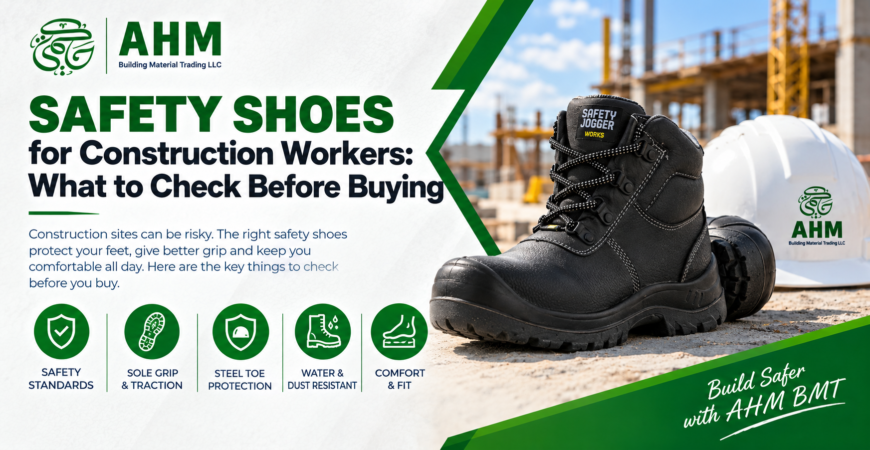
Construction sites involve heavy materials, tools, uneven surfaces, and changing work conditions. Workers may spend long hours standing, walking, lifting materials, and moving between different work areas. In these environments, suitable protective footwear is an important part of a workplace safety plan.
Safety Shoes help protect workers’ feet from specific workplace hazards when selected for the job and used correctly. However, not every pair is suitable for every construction task. Buyers need to consider toe protection, sole grip, fit, comfort, durability, and the conditions in which the footwear will be worn.
For contractors, site managers, and procurement teams in Dubai and across the UAE, understanding these factors can make purchasing decisions more effective. This guide explains what to check before buying work footwear and how AHM BMT’s safety product range may support construction and industrial requirements.
Why Are Safety Shoes Important for Construction Workers?
Construction workers can encounter several foot-related hazards during a normal shift. The right footwear should be selected according to the risks identified at the worksite.
Protection Against Impact and Falling Objects
Tools, construction materials, and other objects can fall or strike a worker’s feet. Safety footwear with suitable toe protection can help reduce the risk of certain impact injuries. Buyers should verify the product’s protective rating and confirm that it meets the requirements of the job.
Grip on Worksite Surfaces
Construction areas may contain dust, moisture, loose materials, or uneven flooring. A suitable sole can help provide traction on the surfaces for which it is designed. However, slip resistance varies by product and surface conditions, so buyers should check the footwear’s specifications rather than assume that every safety shoe offers the same level of grip.
Comfort During Long Shifts
Workers may wear protective footwear for much of the day. An unsuitable fit or inadequate support can cause discomfort and make daily tasks more difficult. Proper sizing, suitable cushioning, and a comfortable fit should therefore be part of the buying decision.
Durability for Regular Site Work
Construction footwear may experience repeated contact with rough surfaces, dust, and materials that cause wear. Buyers should assess the shoe’s construction and suitability for the working environment, along with its inspection and replacement requirements.
What to Check Before Buying Safety Shoes
Before placing an order, compare the footwear’s specifications with the actual conditions at the construction site.
1. Toe Protection
Toe protection is an important consideration where workers may encounter falling materials, compression, or accidental impacts.
When comparing products, check:
- Whether the footwear includes a protective toe cap.
- Which impact and compression requirements it meets.
- Whether its protective rating is suitable for the work activity.
- Whether the toe area remains in good condition after regular use.
Do not assume that all protective toe caps provide identical protection. Request the relevant product documentation before making a purchase.
2. Sole Grip and Slip Resistance
The sole should be appropriate for the surfaces on which workers will operate. Construction teams may need different footwear depending on whether they work on dry indoor floors, outdoor areas, or surfaces that may become wet or contaminated.
Check the manufacturer’s information about slip resistance and the conditions under which it has been assessed. Also consider sole wear, because a damaged or worn sole may no longer perform as intended.
3. Fit, Sizing, and Comfort
A shoe that is too tight or too loose can cause discomfort and affect stability while walking. Workers should have enough room for their toes without excessive movement inside the shoe.
Before ordering for a team, confirm the available sizes and establish the correct size for each worker. Where possible, arrange a fitting or sample review before making a large purchase.
4. Upper Material and Overall Construction
The upper material, stitching, sole construction, and overall finish affect how the footwear stands up to regular use. The correct choice depends on the environment and the type of work performed.
Ask the supplier for product specifications and inspect the footwear for construction defects. Do not assume that a particular material is resistant to chemicals, water, heat, or electrical hazards unless the manufacturer confirms the relevant protection.
5. Suitability for the Work Environment
A construction project may involve several tasks, including masonry, material handling, installation, maintenance, and general site movement. The footwear required for one activity may not be suitable for another.
Consider the following before selecting a product:
- The main hazards identified in the site risk assessment.
- The type of floor or ground workers will encounter.
- Exposure to moisture, dust, sharp objects, or other workplace hazards.
- The amount of walking and standing involved.
- Any project-specific PPE requirements.
6. Product Standards and Documentation
Safety footwear should meet the requirements applicable to its intended use and the workplace. Buyers should request documentation confirming the applicable standards, protective rating, and approved applications.
Avoid relying solely on product names, appearance, or general descriptions. If a project specifies a particular footwear standard, verify that the selected product satisfies that requirement before ordering.
Common Types of Safety Footwear to Consider
The most appropriate footwear depends on the hazards present rather than the job title alone. The following table outlines common selection considerations without assuming that every product offers all the listed features.
| Footwear type or feature | Main consideration | What buyers should verify |
| Safety shoes with toe protection | Impact or compression hazards | Toe-cap rating and intended application |
| Footwear with slip-resistant soles | Work on surfaces where slipping is a concern | Tested slip-resistance information and suitable surfaces |
| Safety footwear for extended shifts | Frequent walking or standing | Fit, cushioning, support, and overall comfort |
| Footwear for demanding site conditions | Repeated contact with rough surfaces | Construction quality, wear resistance, and maintenance needs |
| Special-purpose protective footwear | Specific hazards such as chemical or electrical exposure | Explicit manufacturer documentation for the required protection |
These are selection categories, not confirmation that AHM BMT’s listed product comes in every configuration. Buyers should confirm available models and specifications directly with the supplier.
How to Select Safety Shoes for Different Construction Tasks
The work being performed should guide the footwear decision. A general-purpose selection may not address every hazard on a large project.
General Construction Work
For workers involved in everyday construction activities, assess the likelihood of impact injuries, the condition of the walking surfaces, and the amount of time spent on foot. Toe protection, appropriate grip, fit, and durability are useful starting points for comparing options.
Material Handling and Loading Areas
Workers handling building materials may face risks from dropped objects and movement around equipment. Check the required toe protection and ensure the footwear is appropriate for the surfaces and materials handled.
Indoor Work and Warehouse Areas
For indoor areas, consider floor conditions, repeated walking, and the potential for spills or slippery surfaces. Select footwear with suitable grip and comfort for the actual environment.
Outdoor Construction Sites
Outdoor conditions may change throughout the day. Dust, rough ground, moisture, and uneven surfaces can affect footwear performance. Confirm that the selected model is appropriate for the expected conditions and inspect it regularly for wear.
Tasks With Specific Hazards
Some work activities require specialised footwear rather than general safety shoes. Where there is potential exposure to chemicals, electrical hazards, or high temperatures, verify the exact protection required with the site safety professional and the manufacturer’s documentation.
Safety Shoes Buying Checklist for Contractors and Procurement Teams
When purchasing footwear for an individual worker or a larger workforce, use a consistent checklist to compare products.
Before ordering, confirm the following:
- Workplace hazards: Identify the risks the footwear must address.
- Protective features: Confirm the required toe protection, sole characteristics, and other specified features.
- Sizing: Establish the correct sizes for the intended wearers.
- Documentation: Request applicable product standards and technical information.
- Comfort: Consider how the footwear will perform during the expected workday.
- Quantity: Match the order to the number of workers and the required size distribution.
- Availability: Confirm stock, delivery arrangements, and pricing with the supplier.
- Replacement planning: Establish when footwear should be inspected and removed from service.
For bulk purchases, compare products against the same requirements. This helps procurement teams evaluate the available options consistently instead of making decisions based only on price.
Maintenance Tips to Keep Safety Shoes in Suitable Condition
Even suitable footwear needs regular attention. Inspection and maintenance help identify signs of damage that may affect its protective function.
Inspect the Shoes Regularly
Check the upper material, seams, toe area, and sole for visible damage. Look for cracks, separation between the sole and upper, severe wear, or other defects.
Keep the Soles in Good Condition
Check for worn tread and damage that could affect grip. Replace footwear when it no longer provides the protection required by the workplace or when the manufacturer recommends retirement.
Clean According to Manufacturer Instructions
Remove dirt and construction debris using a method suitable for the footwear’s materials. Avoid cleaning products or methods that may damage the shoe.
Check the Fit Over Time
Footwear that once fitted comfortably may become unsuitable as the shoe wears or if the worker’s needs change. Workers should report persistent discomfort or damage rather than continuing to use unsuitable footwear.
Replace Damaged Footwear
Do not continue using shoes with damaged protective components or a condition that compromises their intended function. Follow the manufacturer’s guidance and workplace safety procedures when deciding whether footwear should be replaced.
Safety Shoes and Related PPE Available from AHM BMT
AHM BMT supplies construction and industrial products, including safety equipment for workplace applications. Buyers can browse the company’s product catalogue to review its wider range of products.
For construction teams reviewing PPE requirements, the following listed products may also be relevant:
- Safety Shoes: AHM BMT lists safety footwear intended for construction, industrial, and workplace environments. Buyers can review the Safety Shoes product page and confirm current specifications, available sizes, and stock.
- Safety Helmet: Head protection may be required where workers face falling-object or impact hazards. Review the safety helmet listing and verify its suitability for the site’s requirements.
- Safety Jacket: Visibility may be an important consideration around moving vehicles, equipment, or busy work areas. AHM BMT lists a safety jacket for workplace use; confirm the product’s visibility features and applicable requirements.
- Rubber Hand Gloves: Hand protection should be selected according to the materials handled and the hazards involved. Buyers can review the rubber hand gloves listing and check whether the product is appropriate for the intended task.
These products address different workplace hazards and should not be treated as substitutes for one another. The appropriate PPE combination depends on the site risk assessment and applicable safety procedures.
AHM BMT is located at Shop No. 36, Naif Bazaar Center, Nakheel, Dubai, UAE. Contractors and procurement teams can contact the company to confirm product availability, specifications, and pricing before placing an order.
Conclusion
Buying Safety Shoes for construction workers requires more than selecting a suitable-looking pair. Toe protection, sole grip, fit, comfort, construction quality, and verified product specifications all matter when matching footwear to workplace hazards.
Contractors and procurement teams should begin with a risk assessment, establish the required protective features, and confirm product documentation before purchasing. Regular inspections and timely replacement are also important for maintaining suitable protective footwear.
AHM BMT offers safety footwear alongside other construction and industrial supplies. Reviewing the available products and confirming their specifications with the supplier can help buyers make an informed decision for their workforce.
FAQs:
1. Why do construction workers need safety shoes?
Construction workers may encounter falling objects, impact hazards, rough surfaces, and slippery areas. Suitable safety footwear helps address specific foot-related hazards when selected and used according to its intended purpose.
2. What should I check before buying safety shoes?
Check the toe-protection rating, sole grip, fit, comfort, construction quality, intended application, and applicable product documentation. The footwear should match the hazards identified at the worksite.
3. Are all safety shoes suitable for construction sites?
No. Different products offer different protective features. Buyers should select footwear according to the work activity, surface conditions, and project safety requirements rather than assuming that every safety shoe is suitable for every task.
4. How do I select the correct size of safety shoes?
Use the manufacturer’s sizing guidance and ensure the shoe fits securely without squeezing the toes or allowing excessive movement. For team purchases, confirm individual sizes before placing a bulk order.
5. What is the importance of slip-resistant soles?
Suitable slip-resistant soles can help improve traction on the surfaces for which they are designed. Buyers should verify the product’s slip-resistance information and consider the actual floor conditions at the workplace.
6. How often should safety shoes be inspected?
Inspect footwear regularly and follow the workplace’s safety procedures and the manufacturer’s guidance. Check for damage, worn soles, loose components, and deterioration that could affect the shoe’s protective function.
7. When should safety shoes be replaced?
Replace footwear when its protective components are damaged, the sole is excessively worn, the construction has deteriorated, or it no longer provides the required protection. Follow the manufacturer’s replacement guidance.
8. Can one type of safety shoe be used for every construction task?
Not necessarily. Footwear suitable for general site work may not provide the specialised protection required for certain chemical, electrical, heat, or other hazards. Confirm the requirements for each task before selecting a product.
9. Where can I buy safety shoes in Dubai?
You can contact AHM BMT in Dubai to enquire about its listed safety footwear, available sizes, current stock, specifications, and pricing. Confirm that the selected product meets your project’s requirements before purchasing.