
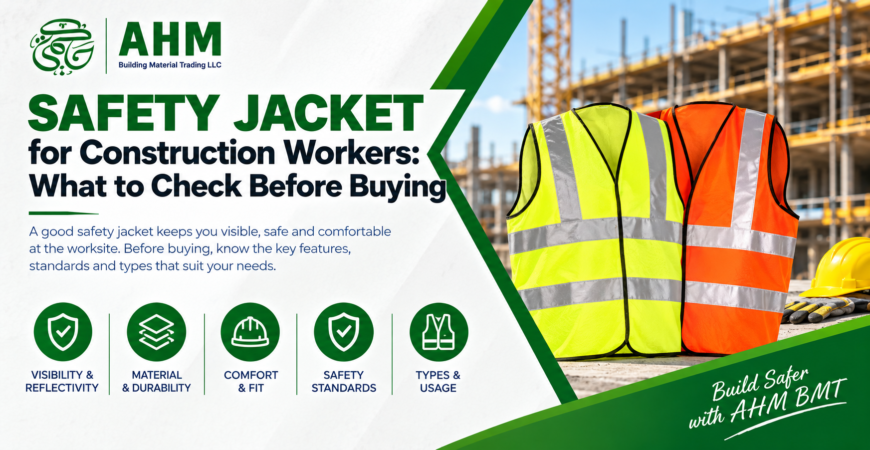
Construction sites involve moving vehicles, heavy equipment, material handling, and changing working conditions. For workers operating near machinery, access roads, or active work zones, being visible to others is an important part of workplace safety. A suitable Safety Jacket can help improve visibility while providing practical workwear for daily site activities.
However, not every jacket is suitable for every construction task. Before purchasing, contractors and procurement teams should consider visibility, reflective detailing, material quality, fit, comfort, durability, and the requirements of the worksite. The right choice should match the hazards workers face rather than being based on appearance or price alone.
For construction companies in Dubai and across the UAE, reviewing these factors can help make safety equipment purchasing more practical and consistent.
Why Is a Safety Jacket Important on Construction Sites?
Construction workers may work around excavators, trucks, forklifts, delivery vehicles, and other equipment. They may also move between open areas, partially enclosed structures, and active work zones where visibility conditions can change.
A suitable high-visibility jacket helps make a worker more noticeable to people operating equipment or moving through the site. Reflective details can also help improve visibility when illuminated by light, depending on the garment’s design and the surrounding conditions.
A Safety Jacket is only one part of a workplace safety programme. Site traffic management, suitable lighting, designated walkways, worker training, and appropriate personal protective equipment (PPE) remain important.
The jacket should be selected according to the job, the site’s risk assessment, and any applicable visibility requirements.
What to Check Before Buying a Safety Jacket
1. Visibility and Reflective Strips
Visibility is one of the first features to assess when purchasing a construction jacket. Look for a design that makes the wearer easy to distinguish from the surrounding environment.
Check the following:
- Visible colour: Consider whether the jacket contrasts clearly with the site’s background.
- Reflective strips: Check their placement, condition, and visibility under suitable lighting.
- Coverage: Make sure the jacket remains visible when the worker is standing, walking, or performing routine tasks.
- Workplace requirements: Confirm whether the job requires a particular high-visibility garment classification or specification.
Do not assume that a brightly coloured jacket automatically meets a formal high-visibility standard. If the project specifies a particular standard or class, verify the garment’s documentation before buying.
2. Material Quality and Durability
Construction workwear is exposed to frequent movement, dust, contact with building materials, and regular use. The jacket’s material should be suitable for the conditions in which workers will wear it.
Inspect the fabric and stitching for visible defects. Pay attention to seams, closures, reflective detailing, and areas that may experience repeated friction.
A durable outer material and well-finished stitching can support regular workplace use, but the expected service life will depend on the garment’s construction, usage, care, and storage.
AHM BMT describes its Safety Jacket as featuring durable material, reflective strips, reinforced stitching, and adjustable fittings. Buyers should confirm the available specifications and suitability for their particular worksite before placing an order.
3. Fit and Freedom of Movement
A jacket should fit securely without restricting the movements needed to perform construction tasks. Workers may need to bend, reach, climb approved access routes, or handle tools throughout their shifts.
When checking the fit, consider:
- Whether the jacket allows comfortable arm and shoulder movement.
- Whether the closures remain secure during normal activity.
- Whether the garment fits over the clothing workers are expected to wear underneath.
- Whether the sleeves or loose sections could interfere with machinery or tools.
- Whether the available sizes accommodate the workforce.
A jacket that is too tight may restrict movement, while an excessively loose garment can create practical problems around equipment. Follow the manufacturer’s sizing guidance and assess fit before ordering in bulk.
4. Comfort During Long Working Hours
Construction workers may wear protective clothing for extended periods. Comfort therefore matters alongside visibility and durability.
Consider the garment’s weight, lining, fit, and ability to accommodate the expected working conditions. If workers perform physically demanding tasks, ensure the jacket does not unnecessarily restrict movement.
Dubai’s climate also makes it important to consider heat exposure when selecting workwear. The garment should be appropriate for the task and temperature, while employers should follow suitable heat-management procedures and provide required breaks and other controls.
Do not assume that every safety jacket is suitable for hot weather or outdoor work in all conditions. Confirm the material and design details for the specific product.
5. Closures, Pockets, and Practical Design
A construction jacket should be practical for the tasks workers perform. Check the closures, pockets, and adjustment features to see whether they suit the intended use.
Useful checks include:
- Whether zips, fasteners, or other closures work properly.
- Whether adjustable fittings allow a secure fit.
- Whether pockets are positioned conveniently and close securely.
- Whether the design is suitable for the other PPE workers must wear.
- Whether loose straps or fabric could become caught in equipment.
Pockets and additional features should support the job without creating unnecessary hazards. A more complicated design is not automatically a safer choice.
6. Suitability for the Work Environment
Different construction tasks create different visibility and clothing requirements. A jacket suitable for one site may not be appropriate for another.
For example, workers directing vehicle movements may have different visibility requirements from workers performing tasks in a controlled indoor area. Roadwork, night work, and operations near moving machinery may also require specific garment classifications.
Before purchasing, identify the relevant hazards and confirm the garment meets the requirements established for that activity.
7. Care, Cleaning, and Replacement
Dust, dirt, repeated washing, and everyday wear can affect a jacket’s appearance and reflective details. A garment that becomes difficult to see may no longer be suitable for its intended role.
Check the manufacturer’s cleaning instructions and establish a routine for inspecting workwear. Workers and supervisors should look for:
- Torn fabric or damaged seams.
- Loose or detached reflective strips.
- Faded or heavily soiled material that affects visibility.
- Broken closures or adjustment fittings.
- Other damage that affects fit or performance.
Remove garments from use when damage or deterioration makes them unsuitable. Replace them according to the manufacturer’s instructions and the site’s safety procedures.
Types of Safety Jackets to Consider
The appropriate jacket depends on the worksite’s requirements. The following are general garment options to discuss with a supplier; they should not be taken as confirmation that every type is available in AHM BMT’s current product range.
High-Visibility Safety Jackets
These garments use visible colours and may include reflective strips. They are worth considering for work areas where workers need to be seen clearly by vehicle operators, equipment operators, or other site personnel.
Check the required visibility classification and confirm that the specific garment meets it.
Lightweight Work Jackets
A lightweight design may be suitable where freedom of movement and reduced clothing bulk are priorities. Check its durability, fit, and compatibility with other required PPE.
Lightweight construction alone does not establish whether a jacket provides adequate visibility or protection.
Insulated or Weather-Suitable Jackets
Some working conditions may require additional insulation or protection from the weather. Confirm the actual material, lining, and intended use rather than assuming a standard construction jacket offers these features.
Where visibility is also required, the garment must meet the relevant visibility requirements in addition to being appropriate for the weather.
Task-Specific Protective Jackets
Certain industrial tasks may require garments designed for particular hazards, such as heat or flame exposure. Ordinary high-visibility workwear should not be treated as a substitute for specialised protective clothing.
Check the risk assessment, garment labelling, and relevant technical documentation before selecting clothing for hazardous operations.
Safety Jacket Comparison Table
| Feature | What to look for | Why it matters |
| Visibility | Suitable colour and reflective detailing | Helps workers remain noticeable in the intended environment |
| Material | Fabric appropriate for the task | Supports practical use and durability |
| Stitching | Well-finished seams and secure detailing | Helps identify construction quality |
| Fit | Appropriate sizing and adjustable features | Supports movement and comfortable wear |
| Closures | Secure, functional fasteners | Helps keep the garment properly fitted |
| Climate suitability | Material and design suited to working conditions | Supports comfort during the shift |
| Compliance documentation | Required classification and supporting information | Helps verify suitability for site requirements |
| Maintenance | Clear cleaning and inspection instructions | Helps workers identify deterioration |
The best option is the one that meets the worksite’s safety requirements while providing a practical fit and suitable durability.
Safety Jacket vs Reflective Vest: Which Should You Choose?
A safety jacket and a reflective vest can both be used as high-visibility workwear, but they are not necessarily interchangeable.
| Consideration | Safety jacket | Reflective vest |
| Garment coverage | Covers more of the upper body, depending on design | Generally covers the torso |
| Layering | May be worn as an outer garment or over other clothing | Can often be worn over existing workwear |
| Weather suitability | Depends on the material, lining, and design | Usually offers less coverage against weather |
| Visibility | Depends on colour, reflective detailing, and garment classification | Depends on colour, reflective detailing, and garment classification |
| Selection priority | Choose according to the required coverage and working conditions | Choose according to the required coverage and working conditions |
Neither option is automatically safer in every situation. The decision should be based on the required visibility classification, workplace conditions, and the garment’s documented performance.
Common Mistakes to Avoid When Buying a Safety Jacket
Buying Based on Price Alone
A low purchase price does not confirm that a garment is suitable for the job. Compare material quality, visibility features, fit, documentation, and expected use before making a decision.
Ignoring the Required Safety Classification
A jacket may look bright and still fail to meet a project’s specified visibility requirements. Verify any required standard or class rather than relying on appearance.
Ordering Without Checking Sizes
Bulk purchases can lead to fit problems if the workforce’s sizing needs are not considered. Check size availability and arrange fit checks where practical before finalising a large order.
Overlooking Reflective Strip Condition
Loose, damaged, or deteriorated reflective detailing may affect visibility. Inspect the garment before use and replace it when it no longer meets the required condition.
Assuming One Jacket Suits Every Task
Workers may perform different jobs in different environments. Review the site hazards and select garments according to the requirements of each role.
Forgetting Other PPE Requirements
A safety jacket does not replace head, eye, hand, foot, or fall-protection equipment when those items are required. Select PPE as part of the complete workplace risk-control plan.
Other PPE Construction Workers May Need
A construction safety programme often involves several types of PPE. The equipment required will depend on the hazards identified for the job.
- Head protection: A suitable safety helmet may be required where workers face head-injury hazards.
- Foot protection: Appropriate safety shoes may help protect against workplace hazards such as impact and slipping, depending on their specifications.
- Eye protection: Safety goggles may be needed for tasks where the eyes are exposed to dust, particles, or other hazards, subject to the product’s intended use.
Each item should be selected for the particular hazard and checked for compatibility with the other PPE workers wear. No single item of equipment can address every construction-site risk.
Buying Safety Jackets from AHM BMT in Dubai
AHM BMT, formally A H M Building Materials Trading LLC, supplies construction and industrial products in Dubai, UAE. Its product range includes safety equipment, hardware tools, building materials, rigging products, lifting equipment, and consumables.
Businesses reviewing workwear and related site supplies can visit the AHM BMT product catalogue to view the listed products.
Before requesting a quotation for safety jackets, contractors and procurement teams should identify:
- The type of construction work being performed.
- The visibility requirements for the site.
- The required garment classification or standard, if applicable.
- The preferred sizes and quantity required.
- The expected working conditions and cleaning requirements.
- Any documentation needed for site approval.
AHM BMT’s product page describes its safety jacket as having reflective strips, reinforced stitching, durable outer material, and adjustable fittings. Contact the supplier to confirm current availability, sizing, specifications, and pricing for the intended application.
Conclusion
A suitable Safety Jacket is an important consideration for construction workers who need to remain visible in active work areas. Before buying, assess the visibility features, material quality, fit, comfort, closures, working conditions, and any required safety classification.
Contractors in Dubai and across the UAE should base their purchasing decisions on the hazards present at the site rather than choosing workwear on appearance or price alone. Regular inspection and timely replacement are also essential to maintaining suitable workwear.
AHM BMT provides safety equipment and other construction-related products in Dubai. Reviewing the product details and confirming the garment’s specifications with the supplier can help businesses select a jacket that matches their workforce’s needs.
FAQs:
1. What should I check before buying a safety jacket for construction workers?
Check visibility, reflective strips, material quality, stitching, fit, closures, comfort, and suitability for the work environment. If the project requires a specific high-visibility classification, verify the garment’s documentation before purchasing.
2. Why are reflective strips important on a safety jacket?
Reflective strips can improve a worker’s visibility when illuminated by light. Their effectiveness depends on the garment’s design, condition, lighting, and surrounding environment.
3. Is a high-visibility safety jacket necessary on every construction site?
The requirement depends on the worksite hazards, job duties, and applicable safety rules. Employers should assess the risks and provide the appropriate high-visibility clothing where required.
4. Which safety jacket is suitable for outdoor construction work in Dubai?
Select a jacket based on the required visibility classification, work conditions, fit, and material. Consider heat and comfort requirements, and confirm that the garment is suitable for the specific task rather than assuming every jacket works in all outdoor conditions.
5. What is the difference between a safety jacket and a reflective vest?
A jacket generally provides more upper-body coverage, while a reflective vest usually covers the torso. Both may have visibility features, but the correct choice depends on the work environment and required garment specifications.
6. How do I know if a safety jacket meets the required safety standard?
Check the garment label, product documentation, and any certification or conformity information relevant to the required standard. Do not rely only on colour or reflective strips to determine compliance.
7. How should a safety jacket be maintained?
Follow the manufacturer’s cleaning and care instructions. Inspect the fabric, seams, closures, and reflective detailing regularly, and remove garments from use if damage or deterioration affects their suitability.
8. Can a safety jacket replace other construction PPE?
No. A safety jacket addresses only the hazards it is designed for. Workers may also require helmets, safety shoes, goggles, gloves, hearing protection, or fall-protection equipment based on the site risk assessment.
9. What should companies consider when ordering safety jackets in bulk?
Confirm the required garment specifications, visibility classification, size range, quantity, material, and availability. Where practical, check samples or sizes before placing a large order.
10. Where can I buy a safety jacket in Dubai?
AHM BMT lists a safety jacket on its website and operates from Naif Bazaar Center, Nakheel, Dubai, UAE. Contact the supplier to confirm current stock, product specifications, available sizes, and pricing.