
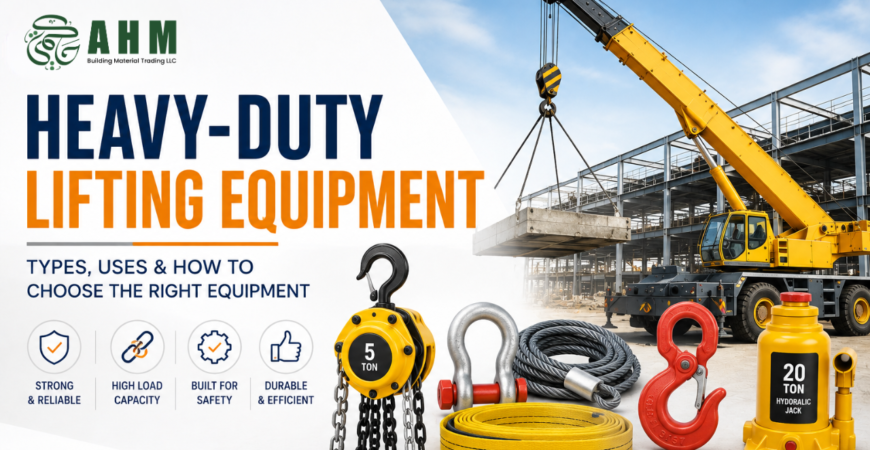
Heavy duty lifting equipments is essential for construction, manufacturing, warehousing, maintenance, marine, and industrial operations. At AHM BMT, we understand that lifting heavy materials requires more than simply choosing equipment with a high load capacity. Contractors and procurement teams need products that suit the load, application, working environment, and complete lifting arrangement.
The right equipment can help teams lift, lower, position, pull, and handle heavy machinery, steel sections, pipes, construction materials, and industrial components more efficiently. However, different tasks require different solutions. A chain hoist may suit controlled vertical lifting, while a hydraulic jack can help raise machinery from ground level. Similarly, lifting slings, shackles, and wire rope accessories play an important role in connecting and securing loads.
The final version below keeps the article focused on AHM BMT and uses relevant internal links from the existing AHM BMT lifting content rather than introducing unrelated category links.
What Is Heavy Duty Lifting Equipments?
Heavy duty lifting equipments includes tools, machines, and accessories designed to lift, lower, pull, position, or move heavy loads. These products play an important role across construction, manufacturing, warehousing, maintenance, logistics, marine operations, and industrial facilities.
At AHM BMT, we support contractors, procurement teams, maintenance professionals, and industrial businesses with products used across demanding construction and material-handling applications. Our focus is not simply on supplying equipment. We understand that every lifting operation has different requirements.
A construction company may need to raise steel components to an elevated work area. A warehouse may need to move heavy palletised materials. Meanwhile, a maintenance team may need to lift machinery for inspection, repair, or positioning.
Although these tasks all involve heavy loads, they do not require the same equipment.
Therefore, selecting the right heavy duty lifting equipments depends on several factors, including:
- Load weight
- Load size and shape
- Centre of gravity
- Required lifting height
- Direction of movement
- Available workspace
- Operating environment
- Frequency of use
- Connection and rigging requirements
At AHM BMT, customers can explore suitable construction, hardware, rigging, lifting, safety, and industrial products based on their specific project requirements.
Types of Heavy Duty Lifting Equipments
Different lifting products serve different purposes. Understanding their primary function helps contractors and industrial buyers make better purchasing decisions.
1. Electric Hoists for Controlled Vertical Lifting
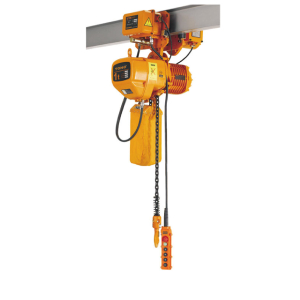
Electric hoists are widely used for lifting and lowering heavy loads in workshops, warehouses, construction sites, manufacturing facilities, and industrial maintenance environments.
Unlike manual lifting equipment, an electric hoist uses a powered motor to raise and lower the load. This can improve efficiency when teams perform repetitive lifting tasks or need controlled vertical movement.
Electric hoists can be suitable for lifting:
- Machinery components
- Steel sections
- Industrial equipment
- Construction materials
- Mechanical parts
- Fabricated structures
However, choosing an electric hoist involves more than checking the maximum lifting capacity.
Buyers should also consider the required lifting height, lifting speed, duty cycle, available power supply, working environment, and supporting structure.
For example, a hoist used occasionally for maintenance may have different requirements from one used repeatedly during daily manufacturing operations.
AHM BMT provides useful information for businesses looking to buy electric hoists online and understand the important factors involved in selecting suitable lifting equipment.
Why Electric Hoists Are Popular
Electric hoists can offer several practical advantages for suitable applications.
They reduce the physical effort required for lifting and can provide more consistent movement than manual handling. They are also useful when workers need to raise loads repeatedly to a specific height.
However, the hoist is only one part of the complete lifting arrangement.
The supporting structure, hooks, slings, shackles, and other connecting components must also suit the intended operation.
2. Crane Systems for Large-Scale Lifting
Cranes are among the most important pieces of heavy duty lifting equipments used on large construction and industrial projects.
They can lift and position heavy materials across significant vertical and horizontal distances, depending on the crane type and configuration.
Common crane types include:
Tower Cranes
Tower cranes are commonly used for high-rise and large-scale construction projects. They can lift materials such as steel, concrete components, and construction equipment to elevated work areas.
Mobile Cranes
Mobile cranes provide flexibility because operators can move them between different lifting locations.
They are often used where permanent lifting equipment is not available or where the lifting requirements change throughout the project.
Overhead Cranes
Manufacturing plants and industrial facilities commonly use overhead cranes for repetitive lifting operations.
These cranes can move heavy machinery, components, and materials along a defined path within the facility.
Jib Cranes
Jib cranes are often used within specific work areas where repeated lifting is required.
They can provide an effective solution for workshops, production areas, and maintenance facilities.
The correct crane depends on the actual lifting operation. Buyers and project teams should consider the load, lifting radius, required height, available access, site conditions, and operational requirements.
3. Forklifts for Heavy Material Handling
Forklifts play a major role in warehouses, factories, logistics operations, and construction sites.
While cranes and hoists mainly focus on lifting and positioning, forklifts can combine lifting with horizontal transportation.
They are commonly used for:
- Moving palletised materials
- Loading and unloading vehicles
- Transporting construction supplies
- Stacking materials
- Handling warehouse inventory
- Moving heavy equipment over short distances
Forklifts can also use different attachments depending on the application. However, the attachment and forklift must be suitable for the intended load and working conditions.
Before selecting a forklift, businesses should consider the required capacity, lifting height, load dimensions, operating surface, available turning space, and indoor or outdoor environment.
Material handling is an important part of overall project efficiency. Therefore, contractors often require more than lifting equipment alone. Supporting hand tools and hardware can also be necessary for installation, adjustment, maintenance, and repair work.
AHM BMT provides resources related to construction toolkits for professionals, helping contractors understand the wider range of equipment and tools used across demanding projects.
4. Lifting Slings and Chains
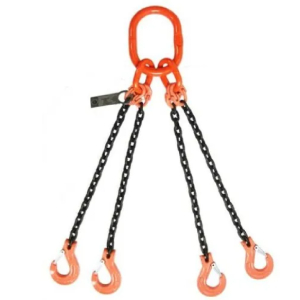
Lifting slings and chains are essential components of many heavy lifting operations.
They help connect the load to the main lifting device.
A crane or hoist may provide the lifting force, but the sling and associated rigging hardware help create the connection between the equipment and the load.
Common lifting sling types include:
- Chain slings
- Wire rope slings
- Synthetic web slings
- Round slings
Each type offers different characteristics and suits different applications.
Chain Slings
Chain slings are commonly used for demanding industrial applications.
They can be suitable for handling heavy materials such as steel components, machinery, and industrial equipment when correctly selected for the application.
Chain slings are available in different configurations, including single-leg, double-leg, and multi-leg arrangements.
The configuration can affect how the load is supported and how forces are distributed.
Wire Rope Slings
Wire rope slings are commonly used in construction, industrial, and heavy-duty applications.
They can provide strength and durability for suitable lifting tasks. However, buyers should inspect the equipment regularly and consider factors such as wear, damage, bending, abrasion, and compatibility with the lifting arrangement.
Synthetic Slings
Synthetic slings can provide flexibility and are useful for suitable loads where surface protection is important.
However, they may require additional consideration when used around sharp edges, abrasive surfaces, or demanding environmental conditions.
Choosing between chain, wire rope, and synthetic slings depends on the actual lifting task.
For a more detailed understanding of sling and chain selection, AHM BMT also provides information about reliable lifting slings and chains for industrial and construction applications.
5. Shackles, Hooks and Rigging Hardware
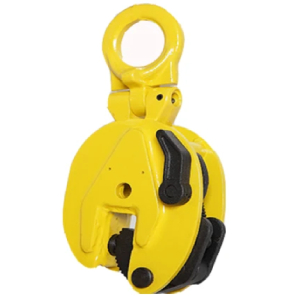
Heavy lifting operations often depend on smaller components that connect the main equipment to the load.
These components can include:
- Shackles
- Hooks
- Master links
- Eye bolts
- Connecting links
- Wire rope fittings
- Other rigging accessories
Although these products are smaller than cranes or hoists, they play an essential role in the overall lifting arrangement.
For example, a shackle may connect a lifting sling to a suitable lifting point or other compatible rigging component.
However, the connection must suit the actual application.
The direction of the load, connection geometry, component compatibility, and product specifications can all influence equipment selection.
At AHM BMT, we understand that successful lifting operations depend on the complete system rather than one individual product.
A high-capacity hoist cannot compensate for an unsuitable sling, damaged hook, incompatible shackle, or incorrectly selected lifting connection.
Therefore, contractors should evaluate the complete path between the lifting equipment and the load.
Hydraulic Jacks for Heavy Lifting and Positioning
Hydraulic jacks are compact but powerful lifting tools used to raise heavy machinery, vehicles, equipment, and structural components.
They use hydraulic force to generate lifting power with controlled movement.
Common applications include:
- Machinery maintenance
- Construction work
- Vehicle servicing
- Equipment installation
- Industrial repairs
- Structural positioning
- Heavy machinery lifting
Hydraulic jacks are particularly useful when teams need to lift equipment from ground level or raise a load by a controlled distance.
Different types of hydraulic jacks can suit different applications.
For example, bottle jacks, floor jacks, and other specialised hydraulic systems may differ in design, lifting range, capacity, and intended use.
AHM BMT provides a dedicated guide on hydraulic jacks for heavy lifting to help buyers understand different options and applications.
Hydraulic Jacks Require the Right Application
A hydraulic jack primarily performs a lifting function.
However, lifting a load and supporting a load for an extended period are different operations.
Therefore, users should always follow the manufacturer’s instructions and applicable workplace procedures. Where the task requires additional support, suitable supporting methods should be used according to the specific operation.
Winches for Pulling and Controlled Movement
Winches are another important type of heavy-duty equipment.
They are commonly used to pull, tension, recover, or move loads along a suitable path.
Depending on the design, a winch may operate manually, electrically, or through another power source.
Common applications include:
- Pulling equipment
- Moving machinery
- Recovery operations
- Tensioning
- Industrial positioning
- Construction work
However, buyers should not assume that every winch is suitable for every lifting application.
The intended use, specifications, installation, rope or cable requirements, and operational conditions should always guide product selection.
Lifting Equipment vs Rigging Equipment
Understanding the difference between lifting equipment and rigging equipment can help businesses select the right products.
Lifting Equipment
Lifting equipment generally provides the mechanical force required to raise, lower, or move the load.
Examples include:
- Electric hoists
- Cranes
- Chain blocks
- Hydraulic jacks
- Winches
Rigging Equipment
Rigging equipment generally helps connect, secure, support, and control the load.
Examples include:
- Lifting slings
- Chains
- Wire ropes
- Shackles
- Hooks
- Eye bolts
- Connecting hardware
Both categories can work together during the same operation.
For example, an electric hoist may raise the load, while a sling and shackle create the connection between the hoist and the load.
This is why buyers should avoid selecting equipment in isolation.
Instead, they should consider the complete lifting arrangement.
How to Choose the Right Heavy Duty Lifting Equipments
Selecting heavy duty lifting equipments requires careful planning.
At AHM BMT, we recommend that buyers first understand the actual requirements of the application.
1. Determine the Load Weight
The first step is to identify the actual weight of the load.
Avoid relying on estimates when accurate information is available.
The equipment and complete lifting arrangement must be suitable for the intended load and configuration.
However, weight is not the only consideration.
2. Consider the Load Shape and Centre of Gravity
A balanced rectangular load behaves differently from an irregular machine or asymmetrical component.
The centre of gravity affects how the load behaves when lifted.
Incorrect lifting points or an unsuitable rigging arrangement can cause the load to tilt or move unexpectedly.
Therefore, load balance and lifting points should form part of the planning process.
3. Identify the Required Movement
Ask what the equipment needs to do.
Do you need to:
- Lift vertically?
- Move the load horizontally?
- Pull equipment?
- Transport materials?
- Position machinery?
- Raise a load from ground level?
The answer will influence the equipment selection.
A forklift may suit material transportation. An electric hoist may suit vertical lifting. A hydraulic jack may help raise machinery. A winch may suit controlled pulling or movement.
4. Consider the Lifting Height
The required lifting height can affect product selection.
A project that needs to move materials several floors upward may require a different solution from a maintenance task involving a small vertical lift.
Consider:
- Required lifting height
- Available headroom
- Travel path
- Final load position
- Space around the load
These factors can help determine whether a crane, hoist, jack, or other lifting solution is more suitable.
5. Evaluate the Working Environment
The working environment can affect equipment performance and durability.
Consider conditions such as:
- Indoor or outdoor use
- Moisture
- High temperatures
- Dust
- Abrasion
- Limited space
- Marine exposure
For example, a lifting sling used around sharp edges may require additional protection and careful selection.
Similarly, equipment used outdoors may face different environmental demands than equipment used inside a controlled workshop.
6. Consider Frequency of Use
The equipment should also match the expected workload.
Occasional maintenance lifting may require a different solution from repeated daily production lifting.
Frequent operations may require equipment designed for the expected duty cycle and operational demands.
Heavy Duty Lifting Equipments for Construction Projects
Construction projects involve a wide variety of lifting tasks.
Teams may need to handle:
- Steel beams
- Concrete components
- Pipes
- HVAC equipment
- Structural materials
- Machinery
- Prefabricated elements
- Building materials
Large-scale projects may use cranes for major lifting operations.
However, smaller tasks may require electric hoists, chain blocks, hydraulic jacks, lifting slings, shackles, and other rigging equipment.
AHM BMT supports contractors by supplying a broad range of products used across construction and industrial projects.
This wider product offering is valuable because contractors often need more than one category of equipment.
For example, a project may require lifting equipment, rigging products, safety equipment, hardware tools, and general construction supplies.
By understanding these wider project requirements, AHM BMT can support businesses with products relevant to different stages of construction and maintenance work.
Heavy Duty Lifting Equipments for Industrial Applications
Industrial facilities also depend on lifting and material-handling equipment.
Manufacturing
Manufacturing facilities may use hoists, cranes, slings, chains, and rigging hardware to move machinery and production components.
Repeated lifting operations require equipment that matches the expected workload and environment.
Warehousing and Logistics
Warehouses commonly depend on forklifts for moving and stacking materials.
However, maintenance teams may also require hoists or hydraulic jacks for machinery servicing.
Equipment Maintenance
Maintenance professionals may use hydraulic jacks, chain blocks, hoists, and rigging equipment when lifting or positioning machinery.
Supporting hardware tools can also be necessary during installation and repair work.
For related maintenance requirements, AHM BMT also offers information about multi-purpose screwdrivers and wrenches that can support a broader range of industrial and construction tasks.
Marine and Industrial Environments
Marine and demanding industrial environments can expose equipment to moisture, abrasion, dust, and other challenging conditions.
Therefore, buyers should consider the environment when selecting lifting and rigging products.
Product condition, maintenance requirements, and suitability for the intended application remain important.
Inspection and Maintenance of Lifting Equipment
Regular inspection and maintenance can help identify visible issues before equipment enters service.
Depending on the equipment and applicable workplace requirements, users may need to inspect for:
- Cracks
- Deformation
- Corrosion
- Excessive wear
- Damaged hooks
- Worn sling material
- Damaged wire rope
- Missing identification
- Other visible defects
Inspection requirements can vary depending on the equipment type, manufacturer guidance, operating environment, workplace rules, and applicable regulations.
Equipment that appears damaged or unsuitable should not be used until the appropriate inspection and action have been completed.
Proper storage can also help protect lifting equipment from unnecessary damage.
Keep products clean and store them in a suitable environment when not in use.
Important Safety Considerations
Heavy lifting requires proper planning.
The capacity of the main lifting device is only one part of the operation.
Teams should also consider:
- Load weight
- Centre of gravity
- Lifting points
- Rigging arrangement
- Component compatibility
- Equipment condition
- Working environment
- Travel path
- Landing area
- Site procedures
Where required, qualified personnel should plan and manage the lifting operation according to applicable regulations, workplace requirements, and manufacturer instructions.
Never exceed the applicable limits of equipment or use products for purposes outside their intended design.
Why Choose AHM BMT for Heavy Duty Lifting Equipments?
AHM BMT is a trusted supplier of building materials, hardware tools, lifting products, rigging products, safety equipment, consumables, and industrial supplies.
We understand the requirements of contractors, construction companies, maintenance teams, workshops, warehouses, and industrial buyers.
Our customers often need more than a single product. A lifting operation may require suitable lifting equipment, rigging accessories, hardware tools, safety products, and other supporting materials.
Therefore, our broad product range helps businesses source products relevant to their wider project requirements.
AHM BMT focuses on supporting professional buyers with products for:
- Construction projects
- Industrial operations
- Material handling
- Maintenance work
- Warehousing
- Manufacturing
- Repair applications
For businesses in Dubai and across the UAE, choosing the right supplier can help simplify procurement and improve access to products required across different project categories.
Conclusion
Heavy duty lifting equipments is essential for construction, industrial operations, manufacturing, warehousing, and maintenance work. However, selecting the right equipment requires more than choosing the product with the highest capacity.
The correct solution depends on the actual load, its shape and balance, the required movement, lifting height, available workspace, operating environment, and complete lifting arrangement.
Electric hoists, cranes, forklifts, lifting slings, chains, hydraulic jacks, winches, shackles, and other rigging products all serve different purposes. When businesses understand these differences, they can make more informed equipment decisions.
At AHM BMT, we support contractors, procurement professionals, industrial businesses, and maintenance teams with a broad range of building materials, hardware tools, lifting products, rigging products, safety equipment, consumables, and other project supplies. By choosing products based on the actual application and project requirements, businesses can build more efficient and reliable material-handling solutions.
Q1. What is heavy duty lifting equipments?
Ans. Heavy duty lifting equipments includes machines and accessories used to lift, lower, pull, position, or move heavy loads. Common examples include cranes, hoists, forklifts, hydraulic jacks, winches, lifting slings, chains, shackles, and hooks.
Q2. What is the difference between lifting and rigging equipment?
Ans. Lifting equipment provides the force or mechanism that moves the load. Rigging equipment connects, secures, supports, or helps control the load during the lifting operation.
Q3. Which equipment is best for lifting heavy machinery?
Ans. The best equipment depends on the machinery weight, dimensions, centre of gravity, required lifting height, available space, and intended movement. Hoists, cranes, hydraulic jacks, and suitable rigging components may all be used for different applications.
Q4. What should I consider before buying an electric hoist?
Ans. Consider the required capacity, lifting height, lifting speed, power supply, duty cycle, working environment, and supporting structure. The complete lifting and connection arrangement should also suit the intended operation.
Q5. What is a lifting sling used for?
Ans. A lifting sling helps connect and support a load during a lifting operation. Different sling types can suit different loads, environments, surface conditions, and lifting configurations.
Q6. Can hydraulic jacks lift heavy machinery?
Ans. Yes, suitable hydraulic jacks can be used for heavy machinery lifting and positioning applications. However, buyers should select the correct type and capacity for the specific task and follow manufacturer instructions and applicable procedures.
Q7. Why is equipment inspection important?
Ans. Regular inspection can help identify visible wear, damage, corrosion, deformation, and other conditions that may affect the suitability of lifting and rigging equipment.