
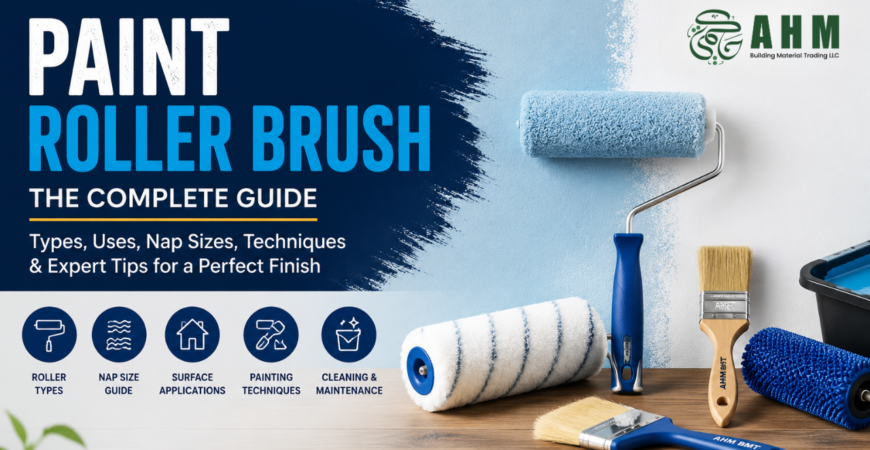
A paint roller brush is an essential tool for achieving fast, even, and professional paint coverage. At AHM BMT, we understand that contractors, painters, maintenance teams, and construction professionals need reliable painting tools that deliver consistent performance across different applications. From large wall and ceiling projects to detailed finishing work, choosing the right roller can make a noticeable difference in coverage, efficiency, and final appearance.
A roller that works well on a smooth interior wall may not perform effectively on concrete, textured plaster, or masonry. Similarly, using the wrong roller nap can create excessive texture, visible roller marks, poor coverage, or unnecessary paint splatter.
For standard wall and ceiling applications, a suitable paint roller blue can help painters achieve consistent coverage across larger surfaces. However, textured surfaces and detailed areas may require different painting tools.
This complete guide explains everything you need to know about paint roller brushes, including roller types, nap sizes, applications, painting techniques, common mistakes, cleaning, maintenance, and how to select the right tools for professional projects.
What Is a Paint Roller Brush?
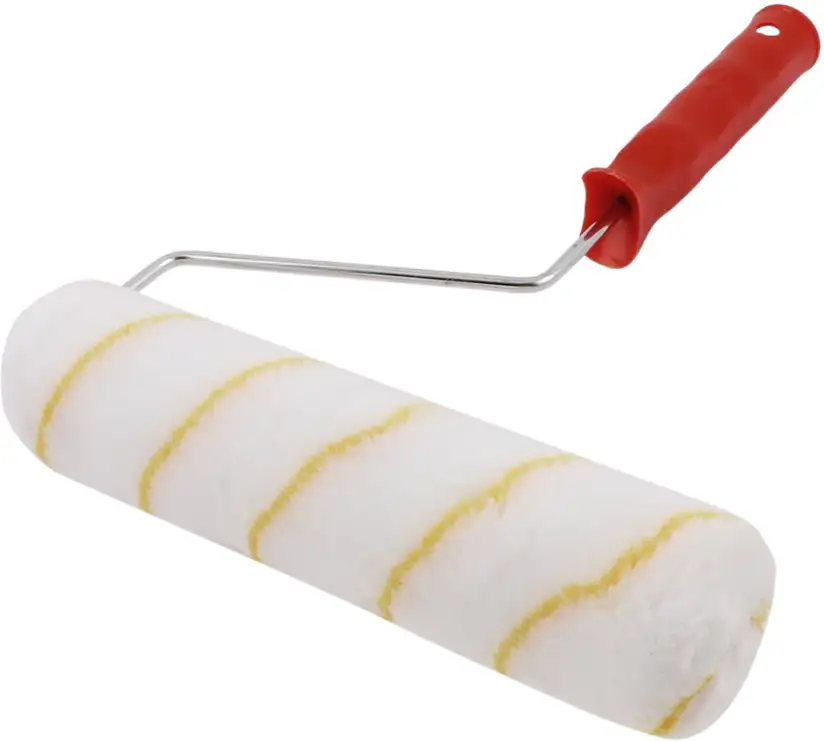
A paint roller brush is a painting tool designed to apply paint over large surfaces quickly and evenly. It normally consists of three main parts: a handle, a roller frame, and a roller cover.
The roller cover absorbs paint from a tray and transfers it onto the surface as the painter moves it across the wall, ceiling, or other material.
Unlike a conventional brush, a roller covers a wider area with each movement. This makes it particularly useful for projects where speed and consistency are important.
Paint roller brushes are commonly used for:
- Interior walls
- Exterior walls
- Ceilings
- Concrete surfaces
- Masonry
- Plaster
- Textured walls
- Doors
- Wood panels
However, painters should not use the same roller for every application. Surface texture plays a major role in determining the correct roller nap.
Why Choosing the Right Paint Roller Brush Matters
The correct paint roller can improve both productivity and finish quality.
When you match the roller to the surface, you can achieve better paint distribution and reduce common application problems. A suitable roller also helps you complete large projects more efficiently.
The right paint roller can help:
- Improve paint coverage
- Reduce application time
- Create a more consistent finish
- Minimise visible roller marks
- Reduce unnecessary paint splatter
- Reach textured areas more effectively
- Reduce rework
On the other hand, using the wrong roller can create several issues.
For example, a long-nap roller can leave excessive stipple on a smooth wall. A short-nap roller may struggle to apply paint evenly over rough masonry or textured plaster.
Therefore, professional painters usually select their roller according to the surface instead of using one roller for every project.
Types of Paint Roller Brushes
Paint rollers are available in several types. Each type serves a different purpose and performs best under specific conditions.
Standard Paint Rollers
Standard paint rollers are commonly used for large walls and ceilings.
They provide efficient coverage and allow painters to apply paint over broad surfaces in less time. They are suitable for residential, commercial, renovation, and maintenance projects.
The roller cover should still match the surface. For example, a standard roller with a short nap can work well on smooth interior walls, while a thicker cover may suit lightly textured surfaces.
For general painting requirements, AHM BMT offers a paint roller blue that can support wall and surface painting applications.
Texture Paint Rollers
Textured surfaces require a different approach. A standard smooth roller may not effectively reach uneven areas or may fail to produce the desired decorative effect.
A texture paint roller is suitable for applications where surface texture or decorative finishing is required.
These rollers can help distribute suitable coatings across uneven surfaces and may also support specific texture effects, depending on the roller design and coating used.
Before starting a large project, test the texture on a small section. This helps you confirm the finish before applying it across the complete surface.
Mini Paint Rollers
Mini rollers provide better control in small or narrow areas.
They are useful for:
- Doors
- Cabinets
- Small wall sections
- Window surrounds
- Narrow panels
- Hard-to-reach spaces
A mini roller can reduce the amount of brushwork required while still providing a smooth finish on suitable surfaces.
Understanding Paint Roller Nap Sizes
The nap refers to the length of the fibres on a roller cover.
Nap length determines how much paint the roller can hold and how effectively it can cover the surface texture.
As a general rule:
Smooth surfaces require shorter roller naps, while rough or textured surfaces require longer naps.
Choosing the correct nap improves paint coverage and helps control the final surface appearance.
1/4-Inch Nap Roller
A 1/4-inch nap roller works best on very smooth surfaces.
Typical applications include:
- Smooth doors
- Cabinets
- Metal surfaces
- Trim
- Fine finishing work
- Smooth wood
The short fibres help reduce unwanted texture and create a cleaner finish.
However, this roller may not hold enough paint for rough or porous surfaces.
3/8-Inch Nap Roller
A 3/8-inch nap roller is one of the most versatile options for general painting work.
It is commonly used for:
- Interior walls
- Ceilings
- Drywall
- Smooth plaster
- Lightly textured walls
This nap size provides a balance between paint capacity and finish quality.
For many standard wall painting projects, a 3/8-inch roller offers sufficient coverage without creating excessive stipple.
1/2-Inch Nap Roller
A 1/2-inch nap roller is suitable for surfaces with moderate texture.
It can work well on:
- Lightly textured walls
- Textured ceilings
- Concrete
- Semi-rough surfaces
The longer fibres hold more paint and help the roller reach into small surface variations.
3/4-Inch Nap Roller
A 3/4-inch nap roller is designed for rougher surfaces.
You can use it for:
- Stucco
- Masonry
- Rough plaster
- Textured exterior walls
The longer nap allows the roller to carry more paint and reach into deeper surface textures.
1-Inch and Longer Nap Rollers
Very rough surfaces may require a 1-inch or longer nap.
These rollers are useful for:
- Rough concrete
- Brick
- Concrete blocks
- Deeply textured surfaces
However, you should avoid using a very long nap on a smooth wall because it can leave excessive texture and increase paint splatter.
How to Choose the Right Paint Roller for Different Surfaces
The surface should always guide your roller selection.
Best Paint Roller for Smooth Walls
Smooth walls require a roller that provides even coverage without leaving unnecessary texture.
A 1/4-inch or 3/8-inch nap is generally suitable.
For most standard interior walls, a 3/8-inch roller provides a practical balance between paint pickup and a smooth finish.
Best Paint Roller for Interior Walls
Interior walls can vary from very smooth drywall to lightly textured plaster.
A 3/8-inch nap often works well for smooth walls. However, if the wall has more texture, a 1/2-inch roller may provide better coverage.
Always inspect the wall before selecting the roller.
Best Paint Roller for Ceilings
Ceilings require good coverage and controlled application.
A shorter nap can work well for smooth ceilings, while textured ceilings may need a medium or longer nap.
Using the correct roller also helps reduce the need for repeated passes.
Best Paint Roller for Textured Walls
Textured walls require a roller that can reach into the surface.
A 1/2-inch nap may work well for light textures. Rougher surfaces may require a 3/4-inch or longer nap.
For decorative applications, a texture paint roller can also provide a more suitable solution depending on the required surface effect.
Best Paint Roller for Concrete and Masonry
Concrete and masonry often contain pores, grooves, and uneven areas.
A medium or long-nap roller can improve coverage by carrying more paint and reaching into the surface texture.
The correct nap depends on the actual condition of the surface. A lightly textured concrete wall may not require the same roller as rough masonry.
Paint Roller vs Paint Brush
Paint rollers and paint brushes serve different purposes.
A paint roller works best for large surfaces where speed and even coverage matter.
A paint brush provides greater control around detailed areas.
Use a roller for:
- Large walls
- Ceilings
- Broad flat surfaces
- Large panels
Use a paint brush for:
- Corners
- Edges
- Trim
- Detailed areas
- Narrow spaces
Professional painters often use both tools during the same project.
They usually start by cutting in around corners, ceilings, and edges with a brush. Then they use a roller to complete the larger surface.
For detailed cutting and controlled edge work, an angle brush can provide better access and control than a standard wide brush.
Using the correct tool for each area can improve the finish and reduce unnecessary touch-up work.
How to Prepare a Surface Before Painting
Even the best paint roller cannot correct poor surface preparation.
Before painting, inspect the surface carefully.
Remove dust, dirt, grease, loose paint, and other contaminants. Repair cracks, holes, and damaged areas before applying paint.
Basic preparation should include:
- Cleaning the surface
- Removing loose material
- Repairing cracks and holes
- Sanding rough areas when required
- Allowing the surface to dry completely
Proper preparation helps improve paint adhesion and creates a more consistent final appearance.
You should also follow the paint manufacturer’s instructions for surface preparation, primers, drying time, and recoating.
How to Prepare a New Paint Roller Brush
New roller covers can contain loose fibres.
If these fibres remain on the roller, they may become trapped in the painted surface.
Before using a new roller:
- Inspect the roller cover carefully.
- Remove loose fibres and debris.
- Ensure the cover fits securely on the frame.
- Prepare a clean paint tray.
- Confirm that the nap matches the surface.
You can also use painter’s tape to remove loose lint before loading the roller.
This simple step can help improve the final finish, especially when painting smooth surfaces.
How to Use a Paint Roller Brush Properly
Correct technique plays a major role in the final result.
Work in Manageable Sections
Do not try to cover an entire wall in one uncontrolled pass.
Instead, divide the wall into manageable sections.
This approach allows you to control the paint and maintain more consistent coverage.
Use the W Technique
The W technique is a practical method for distributing paint across a wall.
Start by rolling a large W-shaped pattern. Then fill the open areas using smooth and overlapping strokes.
This method helps distribute paint across the surface before completing the section.
However, do not focus only on the W shape. Maintain consistent pressure and avoid allowing the roller to run dry.
Maintain a Wet Edge
A wet edge helps reduce visible lap marks.
Continue painting into the next section while the previous section remains workable.
If the previous section dries completely before you overlap it, visible lines may appear.
This becomes particularly important when painting large walls or surfaces with finishes that show overlap marks more easily.
Apply Even Pressure
Do not press the roller excessively.
Heavy pressure can squeeze paint unevenly from the cover and create inconsistent texture.
Instead, use steady pressure and allow the roller to distribute the paint naturally.
When the roller starts running dry, reload it instead of pressing harder.
How to Avoid Paint Roller Marks
Roller marks can make an otherwise good paint job look uneven.
Several factors can cause these marks.
Using the Wrong Nap
A roller with an incorrect nap can create poor results.
For example, a long-nap roller can leave heavy texture on a smooth wall.
Always match the roller to the surface.
Dry Rolling
Dry rolling occurs when the roller does not contain enough paint.
The roller can drag across the surface and leave uneven areas.
Reload the roller before coverage becomes inconsistent.
Applying Too Much Pressure
Pressing too hard does not improve coverage.
Instead, it can create roller marks and uneven paint release.
Use controlled and consistent pressure.
Overloading the Roller
Too much paint can cause splatter and thick patches.
Use the tray to distribute the paint evenly before applying it to the wall.
Poor Surface Preparation
Dust, grease, and loose material can affect paint adhesion and appearance.
Always prepare the surface before painting.
Common Paint Roller Mistakes to Avoid
Avoiding common mistakes can save time, materials, and labour.
Using One Roller for Every Surface
Do not assume one roller will work for smooth walls, textured surfaces, and masonry.
Select the nap according to the surface.
Ignoring Roller Quality
Low-quality rollers may shed fibres, lose their shape, or distribute paint unevenly.
Choose a suitable roller for the application and expected finish.
Pressing Too Hard
Heavy pressure can create uneven texture.
Use consistent pressure and reload the roller when necessary.
Using a Worn Roller Cover
A roller cover can become damaged, flattened, or contaminated.
Replace it when it no longer provides consistent results.
Ignoring Edges and Detailed Areas
A roller cannot efficiently paint every corner.
Use a paint brush or an angle brush for cutting in and detailed sections.
How to Clean and Maintain a Paint Roller
Proper cleaning can extend the usable life of suitable roller covers.
For water-based paint, remove excess paint and clean the roller according to the paint manufacturer’s instructions.
For oil-based coatings, use the cleaning method recommended for that specific product and follow all relevant safety precautions.
After cleaning:
- Remove excess moisture
- Allow the roller to dry properly
- Store it in a clean location
- Keep it away from dust and contamination
Do not allow reusable roller covers to remain filled with dried paint.
Replace roller covers when they become damaged or begin shedding excessive fibres.
Supporting Products for Painting and Maintenance Work
Painting and maintenance projects often require more than rollers and brushes. Contractors may also need a range of supporting consumables for cleaning, maintenance, and general site requirements.
AHM BMT offers a wide selection of building materials, hardware products, tools, consumables, and maintenance supplies.
For specific maintenance or refill requirements, you can also explore the raidator refill.
Sourcing multiple maintenance and project-related products from one supplier can help contractors and procurement teams simplify their purchasing process.
Why Choose AHM BMT for Paint Rollers and Painting Tools?
AHM BMT supplies a broad range of products for construction, maintenance, industrial, and finishing applications.
The company supports:
- Contractors
- Construction companies
- Painters
- Maintenance teams
- Procurement professionals
- Industrial businesses
Painting projects often require several tools rather than a single roller.
For example, a contractor may use a paint roller blue for larger surfaces, a texture paint roller for specific textured applications, a paint brush for detailed work, and an angle brush for corners and edges.
Choosing suitable products for each stage of the painting process can improve efficiency and help achieve a more consistent finish.
AHM BMT serves contractors, businesses, and professional buyers in Dubai and across the UAE with building materials, hardware tools, industrial products, consumables, and other project requirements.
Final Thoughts
Choosing the right paint roller brush can improve paint coverage, reduce application time, and help create a cleaner, more professional finish.
The most important factor is matching the roller to the surface. Smooth surfaces generally benefit from shorter naps, while rough and textured surfaces require longer fibres to reach uneven areas.
Proper preparation also matters. Clean the surface, choose the right roller, load it evenly, work in manageable sections, maintain a wet edge, and apply steady pressure.
For professional projects, using the right combination of a roller, texture paint roller, paint brush, and angle brush can help painters handle large surfaces, textures, corners, and detailed areas more effectively.
By selecting the correct painting tools and following proper application techniques, contractors, painters, and maintenance professionals can achieve better coverage, reduce rework, and produce more consistent results.
Q1. What is a paint roller brush used for?
Ans. A paint roller brush applies paint quickly and evenly across large surfaces such as walls, ceilings, concrete, and masonry.
Q2. Which paint roller nap is best for smooth walls?
Ans. A 1/4-inch or 3/8-inch nap generally works well for smooth surfaces. The exact choice depends on the desired finish and surface condition.
Q3. Which paint roller is best for textured walls?
Ans. A 1/2-inch or longer nap can work better for textured walls. Rougher surfaces may require a 3/4-inch or longer nap.
Q4. Why does my paint roller leave marks?
Ans. Roller marks can result from using the wrong nap, dry rolling, excessive pressure, overloading the roller, or failing to maintain a wet edge.
Q5. Can I use a paint roller and brush together?
Ans. Yes. Professional painters commonly use brushes for corners, edges, and detailed areas and rollers for larger surfaces.
Q6. How do I stop a paint roller from shedding lint?
Ans. Inspect the roller before use and remove loose fibres. Using painter’s tape can help lift loose lint from a new roller cover.
Q7. Can I reuse a paint roller?
Ans. You can reuse a suitable roller cover when you clean, dry, and store it properly. Replace it if it becomes damaged, flattened, or contaminated.
Q8. What is the difference between a paint roller and a texture paint roller?
Ans. A standard paint roller mainly focuses on applying paint evenly across a surface. A texture paint roller is designed for applications where the surface or desired finish requires a textured effect.