
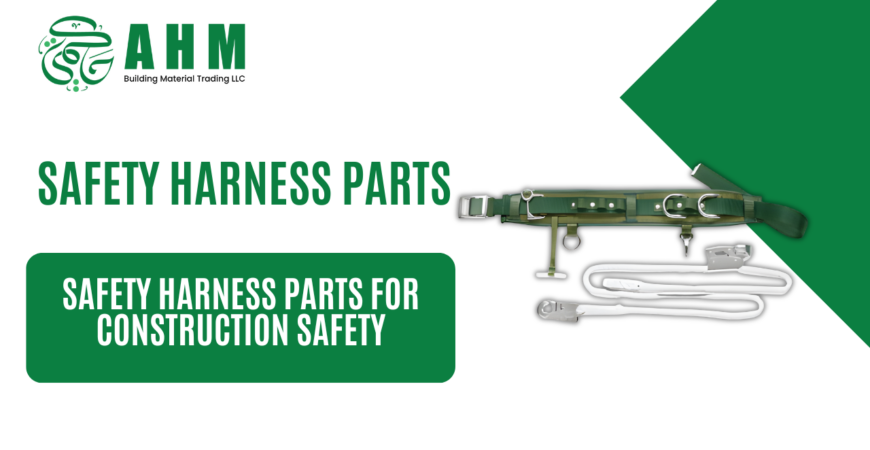
Working at height is one of the most hazardous activities in construction and industrial environments. Falls remain a leading cause of serious injuries and fatalities across the UAE and GCC. This is why understanding safety harness parts is critical for every contractor, safety officer, and site supervisor. A safety harness is not just a single piece of equipment—it is a complete fall protection system made up of multiple components, each playing a vital role in keeping workers secure.
At AHM BMT, a trusted supplier of safety equipment and building materials in the UAE, we help businesses choose the right safety systems and components to meet site-specific requirements while complying with safety standards.
What Are Safety Harness Parts?
Safety harness parts are the individual components that together form a complete personal fall protection system. Each part is designed to distribute force, prevent free falls, and protect workers operating at height.
A typical safety harness system includes:
- Body harness
- Connecting devices
- Anchorage points
- Shock absorbers
- Supporting accessories
Using high-quality parts and ensuring correct assembly is essential for effective fall protection.
Why Safety Harness Parts Are Important in Construction and Industrial Projects
Falls from height can occur during scaffolding work, roofing, maintenance, electrical installations, and industrial inspections. Even a small oversight—such as a worn connector or damaged strap—can lead to severe consequences.
Proper safety harness parts help:
- Reduce fall impact forces
- Prevent complete free falls
- Improve worker confidence and productivity
- Ensure compliance with safety audits and regulations
- Protect employers from legal and financial risks
When combined with other gear and proper training, a complete harness system significantly reduces workplace accidents.
Key Benefits of Using High-Quality Safety Harness Parts
Investing in certified and durable harness components delivers long-term safety and operational benefits.
1. Enhanced Worker Protection
Each component works together to evenly distribute force during a fall, reducing injury severity.
2. Improved Equipment Longevity
Quality materials resist wear, corrosion, and environmental damage common on construction sites.
3. Compliance with Safety Standards
Certified parts help meet OSHA, ISO, and site safety requirements.
4. Better Site Efficiency
Workers equipped with reliable safety systems perform tasks with more confidence and focus.
5. Reduced Downtime and Liability
Preventing accidents means fewer work stoppages and reduced compensation claims.
Types, Specifications, or Variations of Safety Harness Parts
Understanding individual harness helps in selecting the right system for specific applications.
Full Body Harness
The core component that supports the worker’s body. It distributes fall forces across the thighs, pelvis, chest, and shoulders.
D-Rings
Attachment points usually located on the back, chest, or sides. These connect the harness to lanyards or lifelines.
Lanyards and Connectors
Used to connect the harness to an anchorage point. Some include shock absorbers to reduce fall impact.
Anchorage Points
Fixed or temporary points that support the entire fall arrest system. These must be strong and correctly installed.
Shock Absorbers
Reduce the force applied to the body during a fall, minimizing injury risk.
Carabiners and Hooks
Locking connectors that secure different harness components together.
Supporting lifting and anchoring accessories such as a chain block are often used alongside safety systems in industrial environments where load handling and height work overlap.
How Safety Harness Parts Work Together as a System
A harness is only effective when all parts function as one integrated system. The harness secures the body, connectors link it to anchorage points, and shock absorbers reduce impact forces during a fall.
In industrial sites, anchoring systems may also involve durable components like wire rope for fixed lifelines and structural support, ensuring stability and long-term reliability.
Common Applications and Use Cases
Safety harness parts are essential across various industries:
- Construction sites for scaffolding, formwork, and roofing
- Industrial plants for maintenance and inspections
- Oil & gas facilities for elevated operations
- Warehouses for racking and equipment maintenance
- Telecommunication towers and infrastructure projects
To maintain clear safety procedures, sites often use visual indicators and identification tools such as a scaffolding tag to indicate inspection status and usage approval.
Importance of Inspection and Maintenance of Safety Harness Parts
Regular inspection is as important as selecting the right equipment. Harness parts are exposed to dust, moisture, chemicals, and constant movement.
Best practices include:
- Inspecting harnesses before each use
- Checking stitching, buckles, and connectors
- Replacing damaged or worn components immediately
- Storing equipment in clean, dry conditions
- Maintaining inspection records
Additional site safety accessories like wrapping tape are often used for temporary marking, protection, and identification, supporting overall site organization and safety.
Safety Harness Parts and Site Visibility
Fall protection is closely linked to overall site awareness. Clear visibility helps reduce accidents during high-risk operations.
Warning systems such as a revolving light are commonly used near high-risk zones, lifting areas, and elevated work platforms to alert workers and equipment operators.
Why AHM BMT Is a Trusted Supplier for Safety Harness Parts
AHM BMT is recognized across the UAE and GCC for supplying reliable safety equipment tailored to construction and industrial needs.
Why professionals choose AHM BMT:
- Wide range of certified safety harness parts
- Products suitable for light-duty and heavy-duty applications
- Consistent availability for ongoing projects
- Competitive pricing for bulk orders
- Expert understanding of site safety requirements
Whether you need individual components or complete fall protection systems, AHM BMT ensures quality, compliance, and dependable supply.
Choosing the Right Safety Harness Parts for Your Site
Selecting the right harness parts depends on:
- Type of work at height
- Duration of exposure
- Environmental conditions
- Load and movement requirements
- Regulatory and project specifications
Consulting experienced suppliers helps avoid mismatched or unsafe combinations of equipment.
Future Trends in Safety Harness Systems
With advancements in technology, modern harness systems are evolving to include:
- Lightweight materials for comfort
- Smart sensors for fall detection
- Integrated positioning systems
- Enhanced durability for harsh environments
Despite innovation, the fundamentals of safety harness parts remain essential for worker protection.
Conclusion
Understanding and using the right safety harness parts is crucial for preventing falls and ensuring worker safety in construction and industrial environments. Each component—from harnesses and connectors to anchorage points—plays a vital role in building a reliable fall protection system.
Partnering with a trusted supplier like AHM BMT ensures access to certified, durable, and site-ready safety solutions that help protect lives and maintain compliance across projects in the UAE and GCC.
FAQs – Safety Harness Parts
Q1. What are the main parts of a safety harness?
Ans. A safety harness includes a full body harness, D-rings, connectors, lanyards, shock absorbers, and anchorage points.
Q2. How often should safety part be inspected?
Ans. They should be visually inspected before every use and formally inspected at regular intervals as per safety guidelines.
Q3. Can damaged safety harness parts be repaired?
Ans. No. Damaged or worn parts should always be replaced to maintain safety compliance.
Q4. Where can I buy certified safety harness parts in the UAE?
Ans. You can source reliable and certified safety parts from trusted suppliers like AHM BMT.