
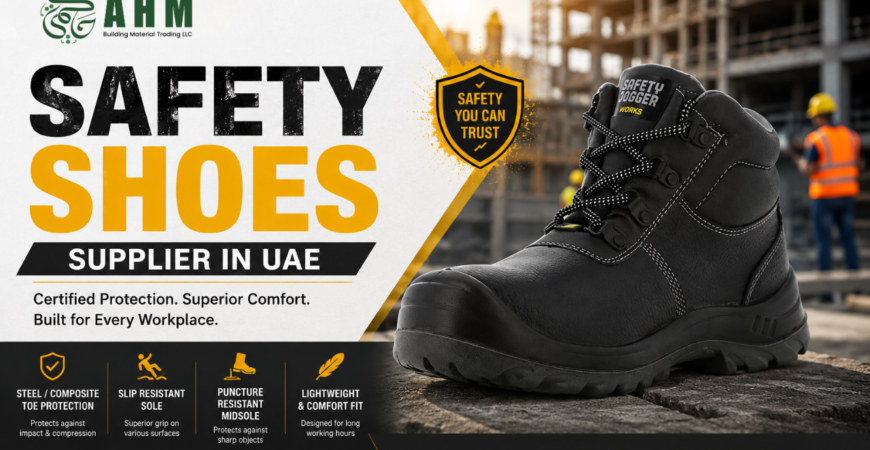
Safety shoes protect workers from common workplace hazards such as falling objects, sharp materials, slippery floors, punctures, moisture, and other job-specific risks. Construction workers, warehouse teams, factory employees, logistics staff, and industrial professionals often wear safety footwear throughout long working shifts.
However, choosing the right safety shoes requires more than selecting a strong-looking pair. You need to consider workplace hazards, safety standards, toe protection, sole type, comfort, fit, and working conditions.
In the UAE, outdoor workers also face high temperatures, dust, and long shifts. Therefore, businesses need safety footwear that balances certified protection with comfort and durability.
As a safety shoes supplier in UAE, AHM BMT supplies safety footwear and workplace safety products for construction, industrial, commercial, warehouse, and logistics applications. This guide explains the different types of safety shoes, safety ratings, selection factors, industry applications, UAE climate considerations, maintenance, and bulk purchasing.
What Are Safety Shoes and Why Are They Important?
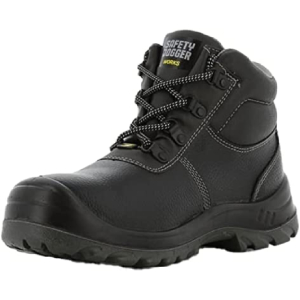
Safety shoes are protective footwear designed to reduce the risk of foot injuries in workplaces. Depending on their construction and certification, they can protect against impact, compression, punctures, slips, moisture, heat, and other hazards.
Every workplace presents different risks. A construction worker may encounter nails, concrete debris, falling tools, and uneven ground. A warehouse worker may spend hours walking while moving heavy packages. An industrial worker may encounter oil, machinery, chemicals, or slippery surfaces.
Therefore, employers should select safety footwear according to the actual hazards workers face.
A suitable pair can provide:
- Toe protection
- Slip resistance
- Puncture protection
- Suitable sole protection
- Comfortable fit
- Durable construction
- Appropriate safety certification
Safety shoes should form part of a wider workplace safety program rather than act as the only protective measure.
What Are the Main Types of Safety Shoes?
Different working environments require different levels and types of protection. Understanding the available options helps businesses choose suitable footwear.
Steel Toe Safety Shoes
Steel toe safety shoes use a steel protective cap around the toe area. They provide strong protection against impact and compression and remain common in construction, manufacturing, workshops, and heavy industrial environments.
However, steel toe footwear generally weighs more than composite alternatives. Therefore, workers who walk long distances may prefer a lighter certified option when the workplace allows it.
Composite Toe Safety Shoes
Composite toe safety shoes use materials such as fiberglass, carbon fiber, or reinforced polymers instead of steel.
They can provide strong impact protection while reducing footwear weight. They also offer a useful option for workers who need non-metallic footwear.
However, buyers should always check the product certification and protection level before selecting composite footwear.
For general construction, industrial, factory, warehouse, and commercial applications, businesses can explore AHM BMT’s safety shoes based on their workplace requirements.
Anti-Slip Safety Shoes
Anti-slip safety shoes use suitable outsole designs and compounds to improve traction on applicable surfaces.
They can benefit workers in warehouses, factories, workshops, logistics areas, and construction sites where floors may become wet, oily, or contaminated.
However, slip resistance depends on the shoe and testing conditions. Always check the manufacturer’s specifications for the intended environment.
Puncture-Resistant Safety Shoes
Puncture-resistant safety shoes help protect the underside of the foot from sharp objects such as nails, metal pieces, and construction debris.
Construction and industrial workers can benefit from this protection when they regularly work around sharp materials.
Electrical Safety Shoes
Electrical work requires footwear that meets the specific electrical hazard requirements of the workplace.
Buyers should check the applicable standard and manufacturer’s specifications instead of assuming that every non-metallic shoe provides electrical protection.
Also, ESD footwear and electrical-hazard footwear serve different purposes. Employers should select the appropriate product based on the identified workplace risk.
What Do S1, S2 and S3 Mean in Safety Shoes?
Safety classifications help buyers understand the protection provided by certified footwear.
S1 Safety Shoes
S1 footwear provides a basic level of protection under the applicable EN ISO 20345 requirements. It includes features such as toe protection and energy absorption at the heel, along with other requirements defined by the standard.
S1 footwear can suit many indoor and relatively dry working environments.
S2 Safety Shoes
S2 footwear provides the protection associated with S1 and adds requirements related to water penetration and absorption of the upper.
This makes S2 footwear suitable for workplaces where workers may encounter moisture.
S3 Safety Shoes
S3 footwear provides a higher level of protection and includes features such as toe protection and penetration-resistant protection under the applicable standard.
Construction and industrial workplaces commonly require this type of protection.
Modern EN ISO 20345 classifications also include designations such as S1PL, S1PS, S3L, S3S, S6, and S7. Therefore, buyers should check the exact marking and product documentation before purchasing.
Steel Toe vs Composite Toe Safety Shoes: Which Is Better?
Neither option works best for every workplace.
| Feature | Steel Toe | Composite Toe |
| Impact protection | High | High |
| Weight | Generally heavier | Generally lighter |
| Metal-free | No | Yes |
| Thermal insulation | Generally lower | Generally better |
| Metal detection | May trigger | Usually does not |
| Typical applications | Heavy industry and construction | Construction, logistics and selected industrial work |
Steel and composite toe caps can both provide strong protection when the footwear meets the required standard.
Choose between them according to workplace hazards, employee requirements, comfort, and site rules.
How to Choose the Right Safety Shoes for Your Job
Choosing safety shoes becomes easier when you follow a structured process.
1. Identify Workplace Hazards
Start by identifying every major foot hazard in the work area.
Consider:
- Falling objects
- Sharp materials
- Nails and debris
- Slippery floors
- Oil and grease
- Water
- Chemicals
- Heat
- Electrical hazards
- Uneven surfaces
- Long walking distances
Your workplace hazard assessment should determine the required footwear protection.
2. Select the Required Safety Class
After identifying hazards, select the safety class that addresses those risks.
A dry warehouse may need different footwear from an outdoor construction site exposed to water, sharp debris, and uneven surfaces.
3. Choose the Correct Toe Protection
Select steel or composite toe protection according to workplace requirements.
Do not choose footwear simply because it looks strong. Confirm that the toe protection meets the required standard.
4. Check the Sole
The sole plays an important role in workplace safety.
Depending on the application, consider:
- Slip resistance
- Puncture resistance
- Oil resistance
- Heat resistance
- Chemical resistance
- Traction
- Abrasion resistance
Always verify the manufacturer’s specifications because outsole performance varies between products.
5. Prioritize Comfort
Workers may wear safety shoes for eight to twelve hours or longer.
Therefore, consider:
- Cushioning
- Breathability
- Weight
- Arch support
- Heel support
- Toe space
- Moisture management
Comfort does not replace safety, but comfortable footwear can improve worker acceptance during long shifts.
6. Check Certification
Check the applicable certification, markings, and product documentation before purchasing.
A professional safety shoes supplier in UAE should provide clear product information to help businesses match footwear with workplace requirements.
Which Safety Shoes Are Best for Different Industries?
Different industries create different hazards. Therefore, businesses should not automatically use one generic safety shoe for every department.
Safety Shoes for Construction Workers
Construction workers may encounter falling materials, nails, sharp metal, concrete debris, uneven surfaces, and wet areas.
Construction footwear may therefore require:
- Toe protection
- Puncture resistance
- Slip resistance
- Durable outsole
- Strong traction
- Comfortable cushioning
The correct protection level should always depend on the specific construction site.
Safety Shoes for Warehouses and Logistics
Warehouse and logistics workers often walk and stand for extended periods while moving goods.
Lightweight safety footwear with cushioning, toe protection, and suitable slip resistance can support comfort during long shifts.
Workers who spend most of their time indoors may have different requirements from employees working between warehouses, loading areas, and outdoor locations.
Safety Shoes for Manufacturing
Manufacturing facilities may expose workers to machinery, metal components, oils, chemicals, and moving equipment.
The required footwear depends on the production process. Some areas may require stronger toe protection, while others may require slip resistance, static control, or chemical-resistant properties.
Safety Shoes for Oil and Gas
Oil and gas environments can involve demanding conditions, including slippery surfaces, heavy equipment, heat, and chemical exposure.
Workers should use footwear that meets the site’s specific safety requirements and applicable standards.
Safety Shoes for Electrical Work
Electrical workers need footwear based on the specific electrical hazards identified at their workplace.
Non-metallic construction can offer advantages in selected applications, but buyers should never assume that a composite toe automatically provides electrical protection.
How Does UAE Weather Affect Safety Shoe Selection?
UAE workers can face high temperatures, dust, intense sunlight, and long outdoor shifts.
Therefore, businesses should consider the local working environment when selecting footwear.
Breathability
Breathable materials can improve comfort during hot working conditions. However, businesses should balance breathability with the protection required for the workplace.
Lightweight Construction
Heavy footwear can become uncomfortable during long shifts. When workplace hazards allow it, lightweight certified footwear can help improve comfort and mobility.
Moisture Management
Workers may experience sweating during hot conditions. Suitable lining and moisture-management features can improve comfort throughout the working day.
Durable Outsoles
Outdoor construction sites can expose footwear to dust, rough surfaces, and debris. Durable soles can support longer service life when workers maintain the footwear properly.
Wet and Muddy Conditions
Some workplaces regularly expose workers to water, mud, or wet ground. In such applications, suitable gum boots can provide a practical waterproof footwear option when they meet the protection requirements of the job.
What Materials Are Used in Safety Shoes?
Manufacturers use different materials to achieve different performance characteristics.
Leather Safety Shoes
Leather provides durability and abrasion resistance and remains common in construction and industrial footwear.
Synthetic Safety Shoes
Synthetic materials can reduce weight and support different footwear designs. They can also simplify maintenance for some applications.
Mesh Safety Shoes
Mesh materials can improve airflow and suit selected dry environments.
However, workers should avoid highly breathable footwear when the workplace requires stronger water or chemical protection.
PU, TPU and Rubber Soles
Manufacturers use PU, TPU, and rubber for different combinations of cushioning, flexibility, traction, durability, heat resistance, and other properties.
The correct sole depends on the work environment.
What Safety Standards Should You Check?
Safety footwear should meet the standard required for the intended workplace.
EN ISO 20345
EN ISO 20345 defines requirements for safety footwear and includes different protection classifications.
ASTM F2413
ASTM F2413 covers performance requirements for protective footwear in the United States.
Product Markings
Check manufacturer markings and documentation to understand the footwear’s actual protection.
Do not select footwear only because a supplier describes it as “industrial,” “heavy duty,” or “professional.” Certification and technical specifications provide more useful information.
Common Safety Shoe Buying Mistakes to Avoid
Avoid these mistakes when purchasing safety footwear.
Choosing Only by Price
Low-cost footwear may not provide the protection, comfort, or durability your workplace requires.
Ignoring Workplace Hazards
Do not purchase footwear before identifying the risks workers face.
Selecting the Wrong Size
Incorrect sizing can cause discomfort and make workers less likely to wear the footwear correctly.
Ignoring the Sole
Toe protection alone does not address slip, puncture, traction, or other sole-related hazards.
Buying Without Checking Certification
Always verify the applicable standard and product markings.
Choosing Heavy Shoes Unnecessarily
If the workplace does not require heavy-duty footwear, a lighter certified option may improve comfort.
How to Maintain Safety Shoes
Proper maintenance can extend the useful life of safety footwear.
Clean shoes regularly and remove dirt from the outsole. Allow wet footwear to dry naturally before storing it.
Avoid exposing shoes to unnecessary heat because excessive heat can damage some materials, adhesives, and construction components.
Inspect the toe area, sole, stitching, upper, and lining regularly.
Replace safety shoes when the sole becomes excessively worn, the protective structure becomes damaged, or the footwear no longer provides the protection required by the workplace.
What Should You Look for in a Safety Shoes Supplier in UAE?
Choosing the right supplier matters as much as selecting the footwear.
Look for a supplier that offers:
- Clear product specifications
- Appropriate safety standards
- Multiple footwear options
- Construction and industrial solutions
- Bulk supply capability
- Consistent product availability
- Reliable delivery
- Professional product support
A supplier should help you select footwear based on workplace requirements instead of simply recommending the most expensive option.
Choose the Right Safety Shoes Supplier in UAE
The right safety shoes protect workers while supporting comfort and productivity throughout the working day. However, the correct footwear depends on workplace hazards, safety classification, toe protection, sole performance, fit, climate, and certification.
For UAE businesses, these factors become particularly important when workers spend long hours in construction, industrial, warehouse, logistics, and outdoor environments.
AHM BMT provides safety footwear alongside a broad range of construction and industrial supplies. By assessing workplace requirements first and selecting footwear based on those requirements, businesses can develop a more practical and effective PPE purchasing strategy.
For companies looking for a safety shoes supplier in UAE, AHM BMT offers safety footwear and related workplace products for a range of commercial, construction, and industrial requirements.
Why Choose AHM BMT as Your Safety Shoes Supplier in UAE?
AHM BMT supplies safety equipment, building materials, hardware, industrial products, lifting equipment, rigging products, and construction consumables for businesses in the UAE.
This broad product range allows contractors, procurement teams, and industrial businesses to source multiple workplace requirements from one supplier.
AHM BMT focuses on practical solutions for construction, industrial, logistics, warehouse, and commercial applications. Businesses can discuss their requirements and select safety footwear according to job hazards, protection levels, quantities, and project requirements.
For companies searching for a safety shoes supplier in UAE, AHM BMT provides a convenient sourcing option alongside its wider range of construction and industrial products.
FAQs
Q1. What are safety shoes used for?
Ans. Safety shoes protect workers against hazards such as impact, compression, punctures, slips, moisture, and other workplace risks.
Q2. Which safety shoes are best for construction?
Ans. Construction workers generally need certified footwear with suitable toe protection, traction, durability, and puncture protection based on site hazards.
Q3. What does S3 mean in safety shoes?
Ans. S3 is a safety footwear classification that provides several protective features, including toe protection and penetration-resistant protection under applicable EN ISO 20345 requirements.
Q4. What safety shoes are suitable for UAE heat?
Ans. Lightweight, breathable, comfortable safety shoes can suit hot working conditions when they still provide the protection required by the workplace.
Q5. Can I buy safety shoes in bulk in UAE?
Ans. Yes. Businesses can purchase safety footwear in bulk for construction, manufacturing, warehouse, logistics, and other workforce requirements.
Q6. Where can I buy safety shoes in Dubai?
Ans. Businesses can source safety footwear from established PPE and industrial suppliers such as AHM BMT, depending on their required specifications and quantities.